

Spritz dry shampoo at the roots, finger-tousle instead of brushing, then give the crown a brief blast with a hand dryer on low heat. That combination fixes most hat hair quickly. A small kit with dry shampoo, texture spray, and a root-lifting powder handles nearly every hat-hair emergency, though a deep crease from hours under a tight beanie sometimes needs a full reset with steam or water.
TL;DR:
- Applying dry shampoo at the roots and using a low heat hand dryer can quickly restore volume and reduce flat hat hair if time allows.
- A portable kit with dry shampoo, texture spray, root-lifting powder, and static-fighting accessories effectively manages most hat-hair emergencies on the go.
- Pre-hat habits like thoroughly drying hair, using a silk or satin liner, and choosing protective styles prevent the worst flattening and static buildup.
- Satin or silk-lined hats significantly reduce friction and static, especially important for curly and textured hair, compared to wool or cotton materials.
- Deep creases from extended hat wear require a blow-dry, steam press, or full wash for complete reset, particularly when quick fixes prove inadequate.
Table of Contents
- How Do You Fix Hat Hair on the Spot?
- What Belongs in a Portable Hat-Hair Toolkit?
- What Should You Do Before Putting on a Hat?
- Does Hat Material Affect How Flat Your Hair Gets?
- How Do You Reset Flattened Hair When Quick Fixes Aren’t Enough?
- Which Hairstyles Hold Up Best Under a Hat?
- How Should You Care for Hats to Prevent Hair Damage?
- What Works Best for Curly, Straight, Fine, or Thick Hair?
- What Actually Works Day to Day
- Get Better Hair Days Built Into Your Hat
- Sources
How Do You Fix Hat Hair on the Spot?
Most hat hair isn’t damage. It’s just hair molded into the wrong shape, and it responds fast once you know the sequence.
- Spray dry shampoo directly at the roots, about six inches away, then wait 60 seconds before touching it. That pause lets the powder absorb oil and grab onto flattened strands, which is what actually restores volume instead of just masking odor.
- Massage it in with your fingers, not a brush. Flip your head upside down and scrunch at the roots. A brush smooths hair flat again, which is the opposite of what you want after a hat.
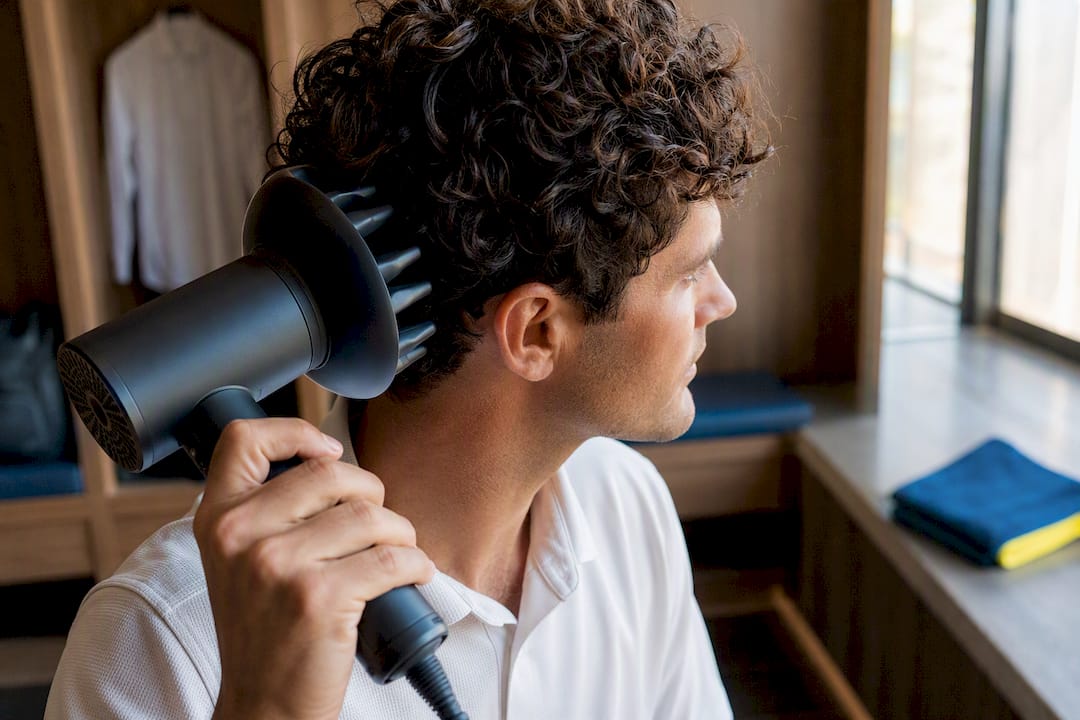
- Hit the roots with a hand dryer on low heat, medium speed, angled upward while you lift sections with your fingers. Fifteen to twenty seconds is usually enough to loosen the crown.
- Kill static with a dryer sheet swipe down the ends, or rub a drop of hair oil between your palms and skim it over flyaways.
Quick fixes work when the flattening is superficial, typically after shorter periods of hat wear. If you’ve had a hat on for a long time and the crease has set firmly, skip straight to a full reset instead of fighting it with dry shampoo alone.
Pro Tip: Keep the dry shampoo can upright and close to the scalp. Spraying at an angle wastes product on hair you don’t need to fix.
What Belongs in a Portable Hat-Hair Toolkit?
A toolkit that fits in a golf bag pocket or glove box beats scrambling for a bathroom mirror. Here’s what earns a spot in it:
- Travel dry shampoo, powder or aerosol. Powder formats give more control and less mess in tight spaces, while aerosols work faster but can leave white cast on darker hair if overapplied.
- Mini texturizing or sea-salt spray to rebuild grip in hair that’s gone limp, especially useful for fine or straight textures.
- A tiny vial of serum or oil, used sparingly (one drop, rubbed between palms) to knock down static and flyaways without weighing hair down.
- Root-lifting powder in a small compact for touch-ups between fixes.
- Extras worth the pocket space: a dryer sheet, a pocket-size brush with flexible bristles, and a compact cordless dryer if you’re prone to serious hat hair.
What Should You Do Before Putting on a Hat?
Prevention beats repair, and most of it comes down to five habits done before the hat ever touches your head.
- Dry your hair completely. Damp hair molds to a hat’s shape almost instantly and holds that crease far longer than dry hair does, which is the single biggest cause of stubborn hat-hair creasing.
- Apply a lightweight leave-in conditioner or anti-static mist. Sealing the cuticle before you put a hat on cuts down on the frizz and static that build up from hours of friction.
- Use a root-volume product beforehand, not after. A light dusting of root powder or mousse before the hat goes on gives you something to reactivate later with just your fingers and a quick dryer blast.
- Wear a protective style when you can. A loose braid or low bun holds its shape under pressure better than loose hair does.
- Line the hat or wear a scarf underneath. A satin or silk layer between your hair and the hat’s interior cuts down on friction and static significantly, which matters most for curly and textured hair.
Pro Tip: If you don’t own a satin-lined hat, a silk scarf folded into a thin band around your hairline does almost the same job for under $10.
Does Hat Material Affect How Flat Your Hair Gets?
Yes, and the difference is bigger than most people expect. A loose, chunky knit hat leaves room for hair to move, while a tight-fitting beanie compresses the scalp and locks in a crease within minutes.
- Satin or silk linings reduce friction and static dramatically compared to raw cotton or wool interiors, and this single feature does more for preventing hat hair than almost any product.
- Wool traps heat well but has a rougher fiber structure that grips hair and worsens frizz over time.
- Cotton breathes better and causes less friction, though it trades away some warmth.
- When warmth is non-negotiable, choose a wool hat but pair it with a silk liner or a scarf underneath. That one change offsets most of wool’s downside without sacrificing heat.
Fit matters as much as fabric. A hat with better ventilation reduces the trapped heat and moisture that make hair cling to itself under pressure.
How Do You Reset Flattened Hair When Quick Fixes Aren’t Enough?
Deep creases from an all-day beanie or golf cap need more than a finger-tousle. Here’s the escalation ladder, from mild to full reset.
- Blow-dry the roots with low to medium heat, lifting sections with your fingers as you go, then finish with a blast of cool air to lock the shape in place.
- Try the steam-towel method for stubborn lines: run a towel under hot water, wring it out, and press it over the flattened area for about a minute. The heat and moisture relax the crease enough that a quick blow-dry afterward reshapes it cleanly.
- Go nuclear if nothing else works. A quick wet-restyle, or a full wash if you have time, resets hair completely. This is worth it before a big event, not for a five-minute errand.
- Go easy on color-treated hair. Repeated high heat from daily resets speeds up fading and dryness, so save the blow-dryer method for when you actually need it.
Pro Tip: A brief low-to-medium heat blow-dry with finger-lifting at the roots restores volume almost as fast as washing, without the time cost of a full shower.
Which Hairstyles Hold Up Best Under a Hat?
The right style before you put a hat on saves you the entire repair process later.
- Low buns, low ponytails, and loose braids keep their shape under pressure and are the most consistently recommended protective styles for hat wear.
- The Olsen tuck, a loose half up-half down twist tucked at the back, gives a neat silhouette that survives hours under a cap.
- Changing your part after you remove the hat instantly restores lift, since the crease usually follows the original part line.
- A light texture spray worked through the ends afterward makes hat hair look deliberately tousled instead of just crushed.
How Should You Care for Hats to Prevent Hair Damage?
Hat hair isn’t only about your hair. It’s also about what’s touching your scalp for hours at a time. Washing and rotating your hats prevents the oil and product buildup that transfers back into your hair and worsens both flattening and odor.
Jaguar Golf builds its headwear with quality construction and better linings specifically because cheap interior fabric grips hair and speeds up wear on both the hat and your style. A hat that keeps its shape holds its crown structure too, instead of collapsing into a permanent dent that presses into your hair every time you wear it.
Store hats crown-up, never crushed under other gear in a bag, and keep linings away from direct sun to preserve the fabric’s texture over time. Golfers who rotate two or three hats through a season, rather than wearing one until it’s worn thin, report noticeably less buildup against the hairline.
What Works Best for Curly, Straight, Fine, or Thick Hair?
Hat hair doesn’t hit every texture the same way, so the fix should match the hair, not just the hat.
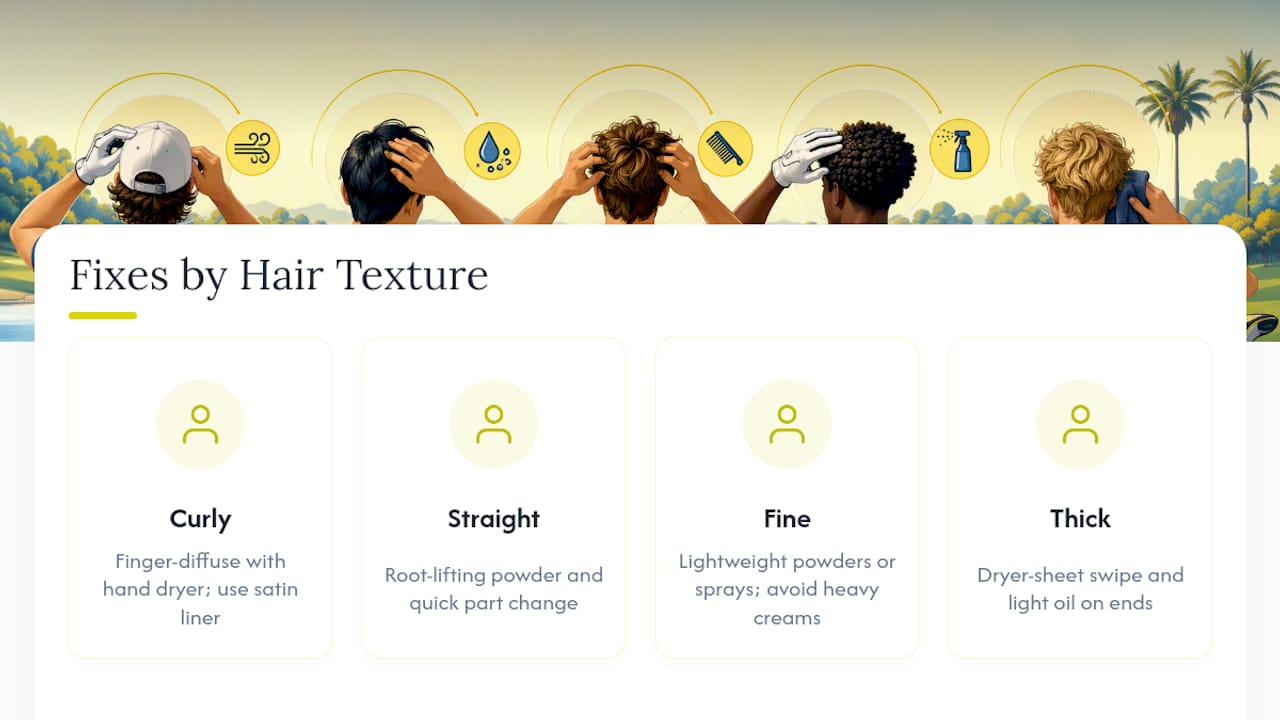
Curly hair flattens into loose waves rather than crushing straight, and it responds best to finger-diffusing with a hand dryer instead of brushing, which would erase the curl pattern entirely. A satin liner matters most here since curls are the most vulnerable to friction and frizz.
Straight hair shows flattening the most visibly since there’s no texture to hide the crease. Root-lifting powder and a quick part change do more for straight hair than any other fix on this list.
Fine hair loses volume fastest under a hat because there’s less natural body to begin with. Lightweight products are essential. Heavy creams or pomades will collapse fine hair further, while powders and sprays build texture without weighing it down.
Thick hair holds heat and moisture longer, so static and frizz tend to be a bigger problem than flatness. A dryer sheet swipe and a light oil on the ends solve most of what thick hair deals with after a hat comes off.
What Actually Works Day to Day
Full resets are rare. Most fixes take a short amount of time once you stop overthinking them.
— Josh
Get Better Hair Days Built Into Your Hat
A satin-lined hat does quiet, constant work that no styling product can replicate: it cuts friction every single hour it’s on your head, not just after the fact. Jaguar Golf’s headwear is built with quality linings and construction designed to reduce that friction and hold its shape wear after wear, which means less crown compression and fewer emergency dry-shampoo moments after your round.

If you’re not ready to invest in a new hat, a silk scarf worn underneath your current one is a solid low-effort fallback. But if you’re on the course regularly, a properly built, well-lined hat pays off every single time you take it off. Browse the current lineup of golf hats and headcovers and see which style fits your game and your hair.
Sources
- 8 Ways to Prevent Hat Hair, According to the Experts — InStyle
- 9 Tips to Beat Winter Hat Hair—Plus, the Cutest Beanie-Friendly Styles | Glamour
- How to Style Curls Under a Hat and Prevent Hat Hair – Carol’s Daughter
- How to Get Rid of Hat Hair, Fast — GQ


