

Four approaches solve nearly every hat storage problem: wall hooks or a peg rack for daily favorites you want on display, hanging closet organizers with dust covers for wide-brim or seasonal hats, stackable clear cases for large collections that need visibility, and hat boxes with acid-free tissue for pieces you’re storing long term. Match the approach to how often you wear the hat and how much space you actually have, and the rest of the decision gets easy fast.
TL;DR:
- Hanging closet organizers with dust covers are ideal for storing up to six hats, when space is limited and visibility without dust exposure is needed.
- Stackable clear hat cases can hold around 28 to 32 hats, making them suitable for larger collections but less accessible for daily wear.
- Performance and golf caps require breathable storage options like clips or open shelves to prevent moisture buildup and preserve embroidered logos.
- Store structured caps with acid-free tissue inside the crown and avoid folding or stacking to prevent misshaping.
- Match hat storage methods to how often and how carefully you wear or store each piece, splitting collections between quick-access racks and long-term boxes.
Table of Contents
- Hat Storage Ideas Worth Trying in Any Room
- How to Match Storage to Your Hat Collection
- Preserving Hat Shape and Cleaning Before Storage
- DIY Hat-Storage Hacks You Can Build in Minutes
- Jaguar Golf’s Tips for Storing Performance and Golf Hats
- My Three Favorite Setups and Why
- Give Your Headwear Storage Worth Protecting
- Where to Check Specs and Buy Featured Organizers
- Sources
Hat Storage Ideas Worth Trying in Any Room
Not every hat deserves the same treatment. A ball cap you wear three times a week needs grab-and-go access. A straw sun hat you pack away every October needs padding and breathing room. Here’s how the main options stack up against each other.
Wall hooks and peg racks work best for hats you actually wear. Space hooks 4 to 6 inches apart so brims don’t overlap, and choose padded or rounded hooks over sharp metal ones. A sharp hook edge will dent a felt crown in a matter of weeks. Structured caps, straw fedoras, and wide-brim sun hats all display well on a peg rack near the entryway.

Hanging closet organizers with dust covers solve the vertical space problem. A typical 6-shelf hanging organizer measures roughly 13 by 17 by 8 inches per shelf, which comfortably fits cowboy hats, bucket hats, and fedoras; for more on space-saving folding and closet organization techniques, see space-saving folding and closet hacks. Six shelves means six hats per unit, and a clear dust cover keeps them visible without exposing them to closet grime. Some versions fold flat when not in use and use breathable felt instead of solid plastic, which matters because mesh panels reduce the musty smell that builds up in sealed containers.
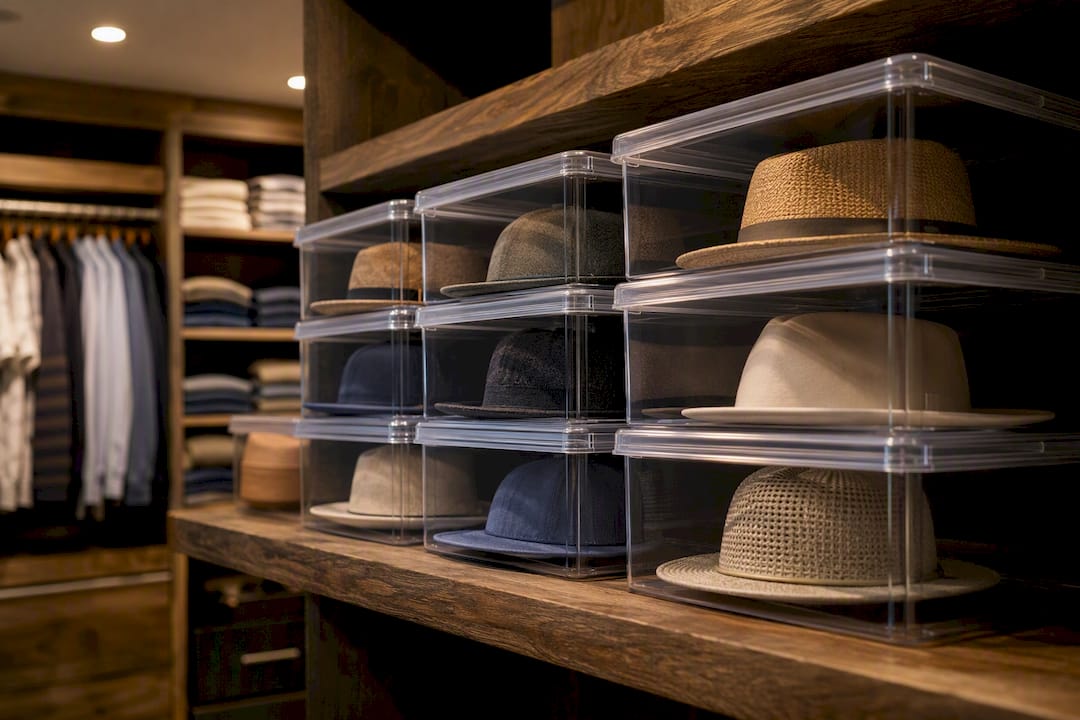
Stackable clear hat cases are the right call once your collection outgrows a single shelf. A large stackable organizer with a clear lid holds around 28 to 32 caps, stacking in a closet without eating floor space. The clear lid lets you spot the hat you want without unsticking three boxes first.
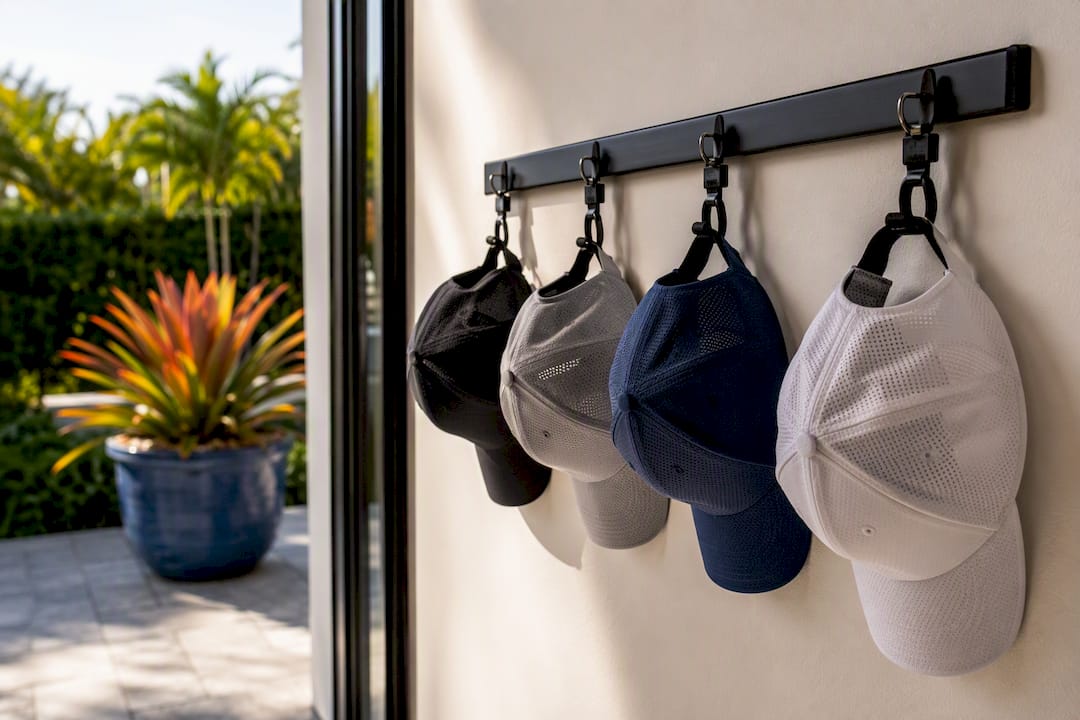
Clip-based cap hangers are the fastest way to organize a ball cap rotation. A set of two closet hangers with adjustable stainless steel clips holds up to 10 caps each, rotating 360 degrees so you can see every logo. Clip to the back strap or side panel only. Clamping the brim will leave a permanent crease.
Beyond those four, a few other formats round out most collections:
- Freestanding coat and hat racks or hall trees double as entryway furniture and work well for mixed collections of hats, jackets, and bags, though they need a stable base and a few square feet of floor space.
- Over-the-door organizers are the best renter-friendly option since they need zero drilling and tuck behind a closet door.
- Hat boxes with acid-free tissue are built for hats you don’t wear often. Nest smaller boxes inside larger ones and label each lid so you’re not opening five boxes to find one hat.
- Tiered display stands create a visual hierarchy on a dresser or shelf, and grouping hats by color or style on a stand cuts down on visual clutter.
Pro Tip: Mix formats instead of picking one. A peg rack for your five favorite hats plus a hanging organizer for the rest beats forcing twenty hats onto hooks meant for six.
Retail and editorial guides consistently point to peg racks, accordion hangers, and hall trees as the display-forward options that do double duty as functional furniture, not just storage.
How to Match Storage to Your Hat Collection
Before buying anything, take stock of what you own and how you use it.
- Count your hats and sort by frequency. Separate daily wear from seasonal or occasional pieces. Daily hats need open, accessible storage. Everything else can go into a box or a closet organizer.
- Map material to method. Structured caps do well on clips or a cap rack. Straw hats and wide-brim styles need a hook or a box with real support underneath the brim, since straw cracks under pressure.
- Map space to method. Closets call for a vertical hanging organizer. Open walls call for a peg rack. Tight apartments without wall space call for a freestanding rack or an over-the-door unit.
- Test the size before you buy. Measure your tallest hat’s crown depth and compare it against a standard shelf compartment, roughly 13 by 17 by 8 inches. If your hat is taller than that, you need a deeper shelf or a hanging clip instead of a boxed shelf.
Pro Tip: If you’re storing a mix of ball caps and wide-brim hats, don’t force them into one organizer type. Split your collection between a clip hanger for caps and a hanging shelf unit for anything with a brim.
Preserving Hat Shape and Cleaning Before Storage
Storage only works if the hat goes in clean and properly supported. Rushing this step is how good hats end up misshapen.
- Clean before you store. Spot-clean wool and felt with a damp cloth, never soak it. Dust straw hats lightly with a soft brush. Check the label on performance caps. Some are machine safe, most aren’t.
- Pad the crown. Use acid-free tissue paper inside the crown to hold its shape, not newspaper, since newspaper ink can bleed onto light-colored fabric.
- Store flat or upright, never folded. Folding a brim creates a crease that’s difficult to reverse.
- Control moisture. Breathable covers or a silica packet work better than sealed plastic bins for natural fibers like straw and felt, which need airflow to avoid mildew.
- Attach clips correctly. Clip to the back strap or a side panel, never the brim, and avoid stacking anything heavy on top of a stored cap.
DIY Hat-Storage Hacks You Can Build in Minutes
You don’t need a full organizing system to get hats off the floor.
- Dowel-and-shelf mini rack. Mount a wooden dowel under a closet shelf with two brackets, then hang hats by the crown for an instant peg rack.
- Repurposed accordion hanger. An old accordion pants hanger works as a hat rack in a pinch. Space hats every other slot so brims don’t crush each other.
- Pegboard with staggered hooks. Mount a pegboard panel and stagger hook heights to create a gallery-style display that also breaks up visual clutter.
- Travel packing shortcut. Drop a hat into a stackable clear case or a hat box with tissue paper and a silica packet before a trip, and it arrives at your destination the same shape it left in.
Jaguar Golf’s Tips for Storing Performance and Golf Hats
Performance golf caps need airflow more than most hats. The sweat-wicking fabric that keeps you cool on the back nine also traps moisture, so a sealed bin is the worst place for it. Store these on open clips or a breathable hanging shelf instead. Embroidered logos deserve extra care, too. Clip caps by the back strap, never through the embroidered panel, to keep stitching intact.
Packing for a tournament? Fold caps crown up in your bag, never crushed under headcovers or shoes, and consider a rigid case if you’re checking luggage. For more on pairing headwear with your setup, see Jaguargolf’s guide to matching hat and golf bag style.
My Three Favorite Setups and Why
For display, I’d take a peg rack over anything else. It costs little and turns hats into decor instead of clutter. For closet savers, the hanging shelf organizer wins because six compartments in one vertical footprint is hard to beat. For long-term pieces, a labeled hat box with tissue paper still outperforms fancier options.
One caveat: buy one good rack instead of three flimsy ones. A single sturdy piece holds shape better than a pile of bargain organizers ever will. For more display inspiration, check Jaguargolf’s guide to choosing golf headwear style.
— Josh
Give Your Headwear Storage Worth Protecting
Jaguargolf builds hats and headcovers that hold their shape long after most mass-market caps have lost theirs, which means the storage ideas above actually pay off. A well-made cap with reinforced stitching and quality fabric is worth a padded hook or a breathable shelf. A thin, floppy cap from a discount rack isn’t. If you’re building a collection worth displaying, start with pieces that earn the shelf space.
- Browse Jaguargolf’s golf hats and headcovers and pick a piece your storage setup will actually get to show off.
Where to Check Specs and Buy Featured Organizers
- Home Collection 2in1 Stackable Hat Storage Organizer — Target
- 2-Pack 6-Shelf Hanging Hat Organizer with Dust Cover — Target
- StorageWorks Hat Organizer for Baseball Caps — StorageWorks
- Hat Rack Ideas for Display — Lowe’s
Sources
- Home Collection 2in1 Stackable Hat Storage Organizer with Clear Lid : Target
- Hat Rack, Hat Organizer – 2-Pack 6 Shelf Hanging Hat Holder with Dust Cover Modern Black Cap Organizer Space Saving : Target
- Hat Organizer for Baseball Caps – Fits All Caps | STORAGEWORKS
- Hat rack ideas to create a fun display | Lowe’s


