

The most reliable way to prevent sweat stains on hats is layering two defenses: an outside-applied fabric protectant spray plus a replaceable absorbent liner or moisture-wicking sweatband. If you need something faster, rotate between two or three hats so each one dries fully between wears, and spot-clean the sweatband the same day you sweat through it.
TL;DR:
- Applying a spray-on protectant on the outer fabric and using moisture-wicking liners significantly reduces sweat absorption and stain formation in hats.
- Combining exterior protectants with high-quality, fast-drying sweatbands, especially those made of Coolmax or bamboo viscose, offers optimal long-term stain resistance.
- Proper hat storage, including full drying before storage and avoiding direct sunlight, is critical to prevent mold, discoloration, and residue buildup.
- Pre-treating new hats with protectant sprays immediately after purchase markedly enhances their stain resistance for future use.
- Natural remedies like baking soda or diluted vinegar can help remove light, fresh stains, but older or set-in stains are effectively permanent and often require professional restoration.
Table of Contents
- How Do You Prevent Sweat Stains on Hats?
- How Do You Apply Protectant Spray and Liners Correctly?
- What Hat Features Actually Resist Sweat Stains?
- What Daily Habits Actually Stop Hat Sweat Stains?
- Are Sweat Stains on Hats Permanent?
- Should You Pre-Treat a Hat Before Wearing It?
- Do Natural Remedies Work for Sweat Stains?
- How Should You Store Hats to Prevent Mold and Residue?
- What Golfers and Active Wearers Get Wrong About Hat Sweat
- Hats Built to Prevent Sweat Stains From the Start
- Sources
How Do You Prevent Sweat Stains on Hats?
Stopping sweat stains comes down to controlling three things: what touches your skin, what touches the fabric, and how fast moisture leaves the hat. Get those right and you rarely see the yellow ring that ruins an otherwise good cap.
Spray-on protectants create an invisible barrier on the outer fabric so sweat and body oils bead up instead of soaking in. They work on the outside of the hat only, never the sweatband, and they trade a small amount of breathability for stain resistance. That tradeoff matters on hot days, so protectants suit hats you wear occasionally more than daily grinders.

Disposable liners stick to the inside of the sweatband and intercept moisture before it reaches the hat’s fabric. They’re cheap, single-use, and need replacing every wear or two depending on how much you sweat. For anyone who sweats heavily during rounds or workouts, liners are the most direct fix because they stop the problem at the source.
Reusable sweatbands solve the same problem without the ongoing cost of disposables. The fabric matters enormously here:
- Coolmax polyester wicks moisture fast and dries quickly between wears.
- Bamboo viscose pulls sweat away from skin and resists odor buildup naturally.
- Merino wool manages moisture well but takes longer to dry and costs more.
- Cotton absorbs the most sweat but holds it against the fabric, which is exactly why cotton-lined hats stain faster than synthetic-lined alternatives.
Combine a wicking sweatband with a spray-treated exterior and you’ve covered both sides of the fabric.
How Do You Apply Protectant Spray and Liners Correctly?
Getting the application right is the difference between a hat that repels sweat for months and one with a botched, patchy finish. Follow the sequence in order.
- Test a hidden spot first. Spray a small patch on the underside of the brim and wait 30 minutes to check for discoloration.
- Hold the can 2 to 3 inches away from the fabric and apply light, even coats. Manufacturers typically recommend three light coats rather than one heavy one.
- Let each coat dry for several minutes before the next. Rushing this step causes streaking.
- Allow a full cure before wearing. Most sweat and stain repellent sprays need about 18 hours to fully cure, and one bottle typically treats up to eight hats.
- Never spray the inside or the sweatband. The barrier is meant for the outer shell only. Spraying the lining traps moisture against your skin instead of repelling it.
- Watch for color bleeding on two-tone hats. Oversaturating one panel can pull dye into an adjacent lighter color.
- Ventilate while applying, ideally outdoors or near an open window, since most protectants are aerosol-based.
For liners, center the adhesive strip on the sweatband, smooth it flat so it doesn’t bunch or shift the hat’s fit, then follow the product’s own replacement schedule.
Pro Tip: Treat a hat right after you buy it, before it’s absorbed any sweat or oils. Spraying a hat that’s already stained locks in what’s underneath instead of preventing what’s ahead.
What Hat Features Actually Resist Sweat Stains?
Prevention starts before you even put the hat on your head. The construction details you check at checkout matter as much as anything you spray on afterward.
Look for a wider sweatband with sealed stitching along the seam. Narrow bands funnel sweat straight to the crown fabric, while wider ones give moisture more surface area to evaporate before it transfers.
An internal moisture barrier behind the sweatband is the single most effective design feature for stopping stains at the source. It works the same way a raincoat’s liner does: one side manages moisture, the other blocks it from passing through.
Fiber choice inside the band determines both comfort and stain risk:
- Coolmax polyester and bamboo viscose wick sweat away from skin quickly, which keeps residue on the surface rather than soaked into fibers, making cleanup far easier than with cotton linings.
- Antimicrobial-treated fabrics slow odor-causing bacteria growth between washes.
- Fast-drying synthetics reduce the window where damp fabric can set a stain.
Structure matters too. Hats with cardboard-reinforced brims can’t tolerate soaking, which limits your cleaning options later. Wool felt hats trap moisture longer than synthetic blends. If you’re buying with prevention in mind, a well-built synthetic or blended cap gives you more cleaning flexibility down the road than a structured wool one.
What Daily Habits Actually Stop Hat Sweat Stains?
Most stains don’t come from one brutal workout. They come from repeated exposure without any recovery time in between. Small daily habits do more long-term work than any single product.
- Rotate at least two hats so each gets a full day to air out and dry completely before the next wear.
- Air hats out immediately after heavy sweating rather than tossing them straight into a bag or car.
- Spot-clean the sweatband same-day using a soft brush and mild detergent to lift salt and oil before they set.
- Dab, don’t scrub, with a barely damp cloth for a lighter touch-up between deeper cleans.
- Sprinkle baking soda inside the band overnight to neutralize odor without adding moisture.
- Store hats somewhere cool and shaded, away from direct sunlight, which accelerates yellowing on light-colored fabrics.
Pro Tip: Keep a small brush and travel-size mild detergent in your golf bag or gym locker. Treating a stain within an hour of forming takes a fraction of the effort of treating one that’s set for a week.
Rotating hats and airing them out isn’t just tidy habit. It’s the single biggest factor Nike’s own care guidance points to for reducing long-term residue buildup.
Are Sweat Stains on Hats Permanent?
Fresh stains respond well to treatment. Old ones often don’t, and knowing the difference saves you from ruining a hat trying to save it.
Fresh sweat stains are mostly salt residue sitting on the surface of the fabric. Older stains involve oxidation, where body oils have chemically bonded with the fabric and, in some cases, broken down the foam inside the brim or sweatband. Once that breakdown happens, no amount of scrubbing reverses it.
- Spot-treat immediately with a soft brush and a small amount of mild detergent, working in small circles.
- Lightly soak the stained area only, never the whole hat, for a few minutes.
- Rinse with cool water and press out excess moisture with a towel rather than wringing.
- Reshape the crown and brim while damp, then air dry away from direct heat.
- For stubborn residue, try a baking soda paste or a light oxygen-based soak before reaching for anything stronger.
If yellowing persists after a proper treatment cycle, that’s usually foam breakdown or set-in oxidation, and it’s effectively permanent. At that point, a hat restoration specialist can sometimes help, but often replacement is the more practical call.
Should You Pre-Treat a Hat Before Wearing It?
Yes, and timing this step correctly makes every other prevention method work better. A brand-new hat, straight out of the box, has never absorbed sweat or body oil, which makes it the ideal moment to apply a protectant.
Wash your hands before handling the hat to avoid transferring oils onto the fabric before you’ve even started. Apply your protectant spray following the same three-coat, ventilated process described earlier, then let it cure fully, typically overnight, before the first wear. Skipping the cure time is the most common mistake here. A protectant that hasn’t finished bonding to the fabric wipes off with the first heavy sweat session, wasting the product and leaving you unprotected exactly when you need it.
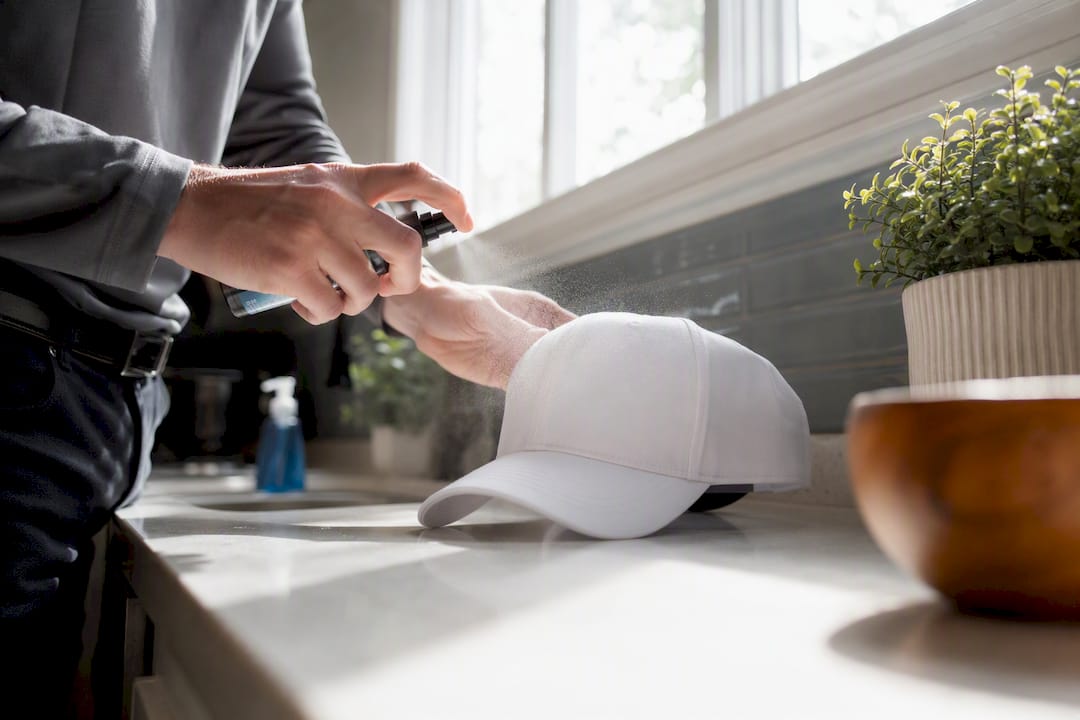
If you’re not using a spray, at minimum insert a fresh liner or clean sweatband before the hat’s first outing. Waiting until after a few sweaty rounds to start prevention means you’re already treating a hat that’s absorbed something, which is a fundamentally harder problem than protecting one that hasn’t.
For hats with sun-protective coatings or specialty fabrics, check the material and brim construction first, since some treated fabrics don’t accept sprays the same way untreated cotton or synthetic blends do.
Do Natural Remedies Work for Sweat Stains?
Household ingredients handle light, fresh staining reasonably well, and they’re worth trying before reaching for anything harsher.
Baking soda is the most reliable natural option. Make a thin paste with water, apply it to the stained sweatband area, let it sit for 15 to 20 minutes, then brush away with a soft toothbrush. It lifts salt residue and neutralizes odor at the same time.
White vinegar diluted with water (roughly equal parts) breaks down oils better than plain water alone. Dab it onto the stain, let it sit briefly, then rinse. Skip this on hats with leather accents or delicate trims, since vinegar can dull certain finishes.
Lemon juice works similarly to vinegar as a mild bleaching agent for light fabrics, but it can lighten colors unevenly on darker hats, so test it on an inconspicuous spot first.
For prevention rather than removal, a cornstarch dusting inside the sweatband before wear absorbs light moisture the same way it does in DIY deodorant recipes, though it’s a weaker substitute for an actual moisture-wicking sweatband.
None of these natural methods match the staying power of a proper protectant spray or wicking liner, but they’re useful, low-cost tools for maintenance between deeper treatments or for anyone who prefers to avoid commercial sprays entirely.
How Should You Store Hats to Prevent Mold and Residue?
Storage is where a lot of otherwise well-maintained hats quietly go bad. Damp fabric packed into a dark, closed space is exactly the environment mold and mildew need.
Always let a hat dry completely before putting it away. Storing even slightly damp fabric traps moisture against the sweatband, and that’s where mold spores take hold first. A hat rack or clip that holds the shape while allowing airflow beats a drawer or bin every time.
Keep stored hats out of direct sunlight. UV exposure accelerates yellowing on both the fabric and any built-up oils that weren’t fully cleaned out, which is why hats left on a dashboard or windowsill discolor faster than ones stored in a closet.
Cool, ventilated spaces beat anything airtight. Sealed plastic bins trap residual humidity and create a musty smell over time, even in hats that seemed dry when stored. If you’re storing hats for an off-season stretch, a light sprinkle of baking soda inside each one absorbs residual moisture and keeps odor from building up while they sit unused.
What Golfers and Active Wearers Get Wrong About Hat Sweat
Most people treat sweat stains as a cleaning problem. It’s really a materials and timing problem, and that distinction shapes everything Jaguargolf builds into its hats. A sealed sweatband, a wicking-fiber lining, and quality stitching do more preventive work over a season than any bottle of spray applied after the fact.
Golfers especially underestimate how much sun exposure compounds sweat damage. Heat speeds up oxidation, which is exactly why the same sweat stain that would fade on a cool day sets permanently after four hours in July sun. If you’re serious about keeping a hat clean long term, pair good materials with the gentle cleaning techniques that actual hat restorers use rather than a washing machine.
The gap between what a $15 cap and a well-built hat can handle isn’t cosmetic. It’s structural, and it shows up exactly when you need the hat to hold up.
— Josh
Hats Built to Prevent Sweat Stains From the Start
Jaguargolf designs every hat around the same principle this guide has been laying out: prevention beats cleanup. Our sweatbands use moisture-wicking synthetic linings instead of cotton, sealed stitching keeps sweat from migrating into the crown fabric, and the overall construction is built for golfers who wear a hat for four or five hours straight in direct sun, not just for a quick photo.

That combination means you’re starting from a stronger baseline than a standard retail cap, so the sprays and liners covered in this guide have less work to do. If you want to see the materials and sweatband construction up close, browse Jaguar Golf’s hat lineup and pair it with our fabric guide to pick the lining that matches how much you actually sweat on the course.
Sources
- How to Get Sweat Stains Out of Hats: Step-by-Step Tips | The Output by Peloton
- What Are The Best Lining Materials To Prevent Hat Sweat Stains? - AceAccessory
- How to Get Stains Off Hats | Nike


