

The fastest way to get tournament-level detail is a custom printed yardage book. The fastest on-course convenience comes from an app. The cheapest path is a DIY kit or a low-cost printed template. Each solves a different problem, and picking the wrong one wastes money or leaves you guessing at 150 yards out.
A yardage book gives you hole-by-hole maps, green diagrams, carry distances to hazards and targets, and often slope or heatmap data on putting surfaces. That’s the core function, whether you buy one, print one, or build one yourself.
- Custom/printed: $20 to $60 per book, 1 to 3 weeks lead time. Best for tournament players and event organizers.
- App-based: Free to roughly $50 to $100 per year. Best for players who want live GPS distances with zero paper.
- DIY: Under $10 in materials, ready same-day. Best for practice rounds and budget-conscious club golfers.
Key Takeaways
The right yardage book format depends on whether you value custom detail, mobile convenience, or low cost, and the top vendors split cleanly along those three lines.
| Point | Details |
|---|---|
| Match format to priority | Choose custom print for tournament detail, apps for convenience, DIY for budget. |
| Compare before ordering | Request a sample page proof and confirm mapping data source before paying for a custom book. |
| Lead times vary widely | Custom books take 1 to 3 weeks; PDFs and apps are available immediately. |
| Protect what you carry | Pair any yardage book with a durable holder so pages survive wet, windy rounds. |
| Jaguargolf covers the gear side | Jaguargolf sells headcovers and hats that protect clubs and complement a yardage-book setup, not the books themselves. |
Table of Contents
- What Are the Best Yardage Book Vendors and Formats?
- How Do You Choose Between Printed, Custom, and DIY Yardage Books?
- Can You Build a Usable DIY Yardage Book in an Afternoon?
- What Does a Yardage Book Actually Cost, and How Long Does It Take?
- How Do Golf Accessories Fit Into Your Yardage Book Setup?
- Sources
What Are the Best Yardage Book Vendors and Formats?
Vendors split into three camps: pure print shops, app-plus-print hybrids, and specialty tour-grade producers. Each targets a different kind of golfer, and the gap between them is bigger than most first-time buyers expect.
Go To Caddie leans hardest into customization. It sells tournament yardage books, blank DIY books, custom holders, and bulk ordering for teams, which makes it the go-to for event organizers who need 50 identical books by Friday. PuttView sits at the opposite end, promising millimeter-accurate mapping and multiple book styles per course, including dedicated event books for tour-level detail. GolfLogix bridges the app and print worlds, offering printed green and yardage books tied to its green-reading app across more than 14,000 courses, so you get mobile convenience with a paper backup in your bag.

Mark Long produces the yardage books used on PGA Tour events, and its reputation rests almost entirely on caddie endorsement rather than marketing copy. Yards Golf Book takes a different angle, building personalized printable PDFs around strokes-gained modeling so club selection is backed by data rather than gut feel. AG Golf yardage book covers the budget end with compact, multi-pack pricing aimed at club players and tournament committees who need volume without the custom-order price tag. GreenBooks and BlueGolf round out the field. BlueGolf’s Yardage Book App overlays yardage-book style maps on satellite imagery with GPS-updating distances to greens, hazards, and targets, which makes it a solid pick if you’d rather glance at a phone than flip pages mid-round.
Buyer shortlist, at a glance:
- Best for events: Go To Caddie, for bulk pricing and holder options.
- Best for tour-level detail: PuttView or Mark Long yardage books, for tour-grade mapping.
- Best for mobile convenience: GolfLogix or BlueGolf, for app-first course coverage.
- Best budget DIY kit: AG Golf yardage book, for low-cost multi-packs.
How Do You Choose Between Printed, Custom, and DIY Yardage Books?
Run through this checklist before you order anything:
- Skill level. Tournament and low-handicap players benefit from custom mapping; casual rounds rarely justify the premium.
- Portability. A pocket-sized book fits a scorecard holder; a full-detail tour book with heatmaps often runs larger and heavier.
- Green detail need. If you putt from memory and want slope data, prioritize vendors like PuttView over basic yardage-only formats.
- Customization. Team names, event logos, and sponsor pages only matter if you’re ordering for a group.
- Budget and lead time. Custom books take 1 to 3 weeks; DIY and app options are ready the same day.
Before ordering a custom book, ask the vendor five things: What file format do they deliver (print-ready PDF vs. proprietary app format)? Where does their mapping data come from (satellite, GPS survey, or licensed course data)? Can they send a sample page proof before the full print run? What’s their bulk discount structure for 10-plus books? And what’s their return or reprint policy if hole numbers or yardages are wrong?
Watch for three red flags: vendors who won’t provide a proof before printing, mapping data with no stated source, and pricing that jumps sharply for “rush” orders with no clear reason.
Pro Tip: Before you approve any print run, cross-check every hole number and green diagram against the course’s own scorecard. A single flipped hole label ruins the whole book, and reprints eat the time you saved by going custom in the first place.
Can You Build a Usable DIY Yardage Book in an Afternoon?
Yes, and it takes less effort than most golfers assume. Gather your materials first: a phone or GPS device, a blank yardage template (many golf forums and sites like Go To Caddie sell blank DIY books), a scorecard holder, a pen, and optionally a rangefinder for carry-distance accuracy.
- Walk or drive the course once and capture hole imagery, or export GPS-based hole maps from an app you already use.
- Mark landing targets, layup zones, and carry distances to hazards on each hole image.
- Assemble one hole per page in order, front and back if your holder allows it.
- Print at home or a copy shop, then trim and bind with a cheap comb binder or hole-punch and rings.
- Do a quick pre-round check: confirm page order, verify yardages against the scorecard, and test that it fits your holder.
- Keep a spare pen and a backup digital copy on your phone.
- Reprint pages as tee boxes or pin positions change.
One quick note on rules: tournament committees sometimes restrict which yardage information is permitted during competition, so check USGA equipment compliance guidance before using a DIY book in sanctioned play.
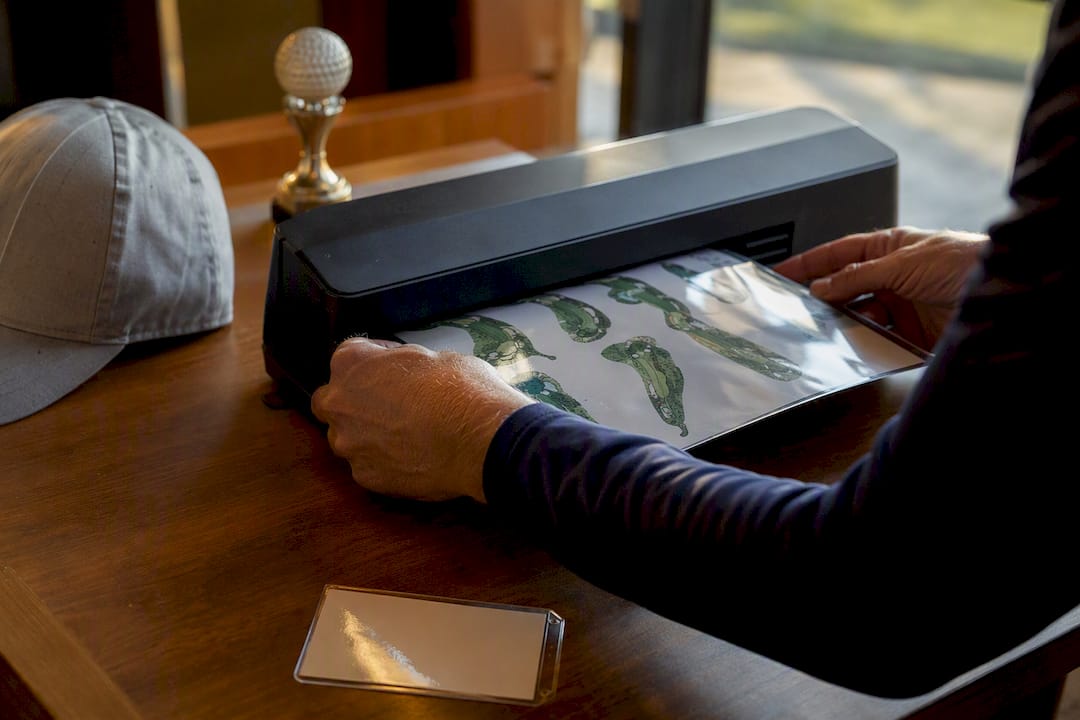
Pro Tip: Laminate high-use pages, like the front nine, so sweat and rain don’t turn your notes into mush by hole 12.
What Does a Yardage Book Actually Cost, and How Long Does It Take?
Printed multi-packs from budget vendors like AG Golf yardage book often run under $15 per copy when bought in bulk. Custom books from Go To Caddie or comparable printers typically land between $20 and $60 per book, with event and team discounts kicking in around 10 or more copies. App options like BlueGolf and GolfLogix are usually free or bundle course access into a modest annual fee, while PDF-based tools like Yards Golf Book price around subscription or per-plan fees rather than a flat print cost.
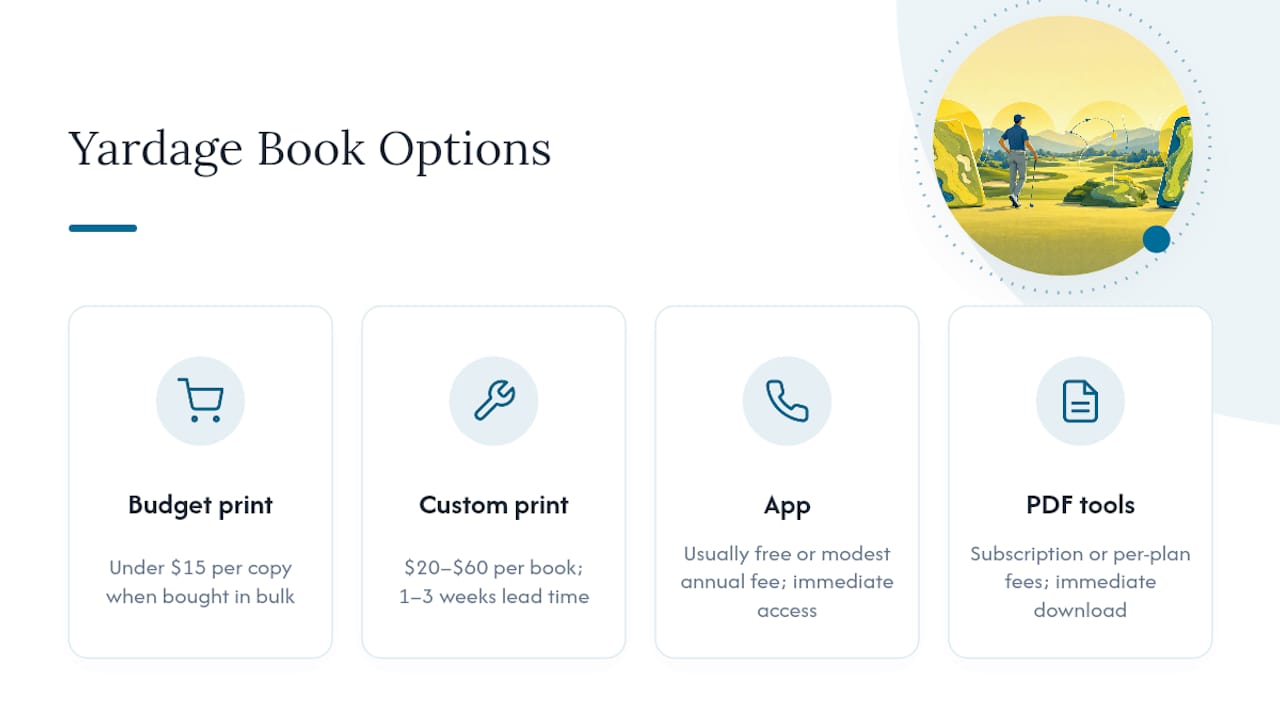
Lead time varies just as much. Downloadable PDFs and app access are available immediately. Custom printed books generally take 1 to 3 weeks depending on order volume and proofing rounds.
Judge value by detail-per-dollar, not sticker price alone. Ask whether the vendor provides a sample page before you commit, since that single proof tells you more about print quality than any marketing page.
How Do Golf Accessories Fit Into Your Yardage Book Setup?
A yardage book only works if it survives the round. A scorecard holder keeps pages dry and flat in your pocket, while a quality headcover protects the clubs you’re matching to those yardages in the first place.
The most common mistake I see is golfers checking the yardage book once off the tee and never again. Recheck it at the green complex, where slope and pin position change your read.
Small gear choices add up over 18 holes.
When Do I Choose a Printed Book Over an App?
Tournament rounds call for maximum detail and room to write notes by hand, so a custom printed book wins. Busy weeknight rounds favor an app like BlueGolf for speed and zero paper. Club players and coaches working with a tight budget do best with a DIY template or a low-cost printed multi-pack. Match the format to the round, not the other way around.
— Josh
Gear That Makes Your Yardage Book Easier to Use on Course
A yardage book earns its keep when it survives 18 holes intact and stays where you can reach it. Jaguargolf’s protective headcovers keep your driver and fairway woods in the same sharp condition you’re relying on when you match a club to a yardage-book number, and a scorecard holder built to fit in a pocket means you’re not fumbling for soggy pages on the back nine.
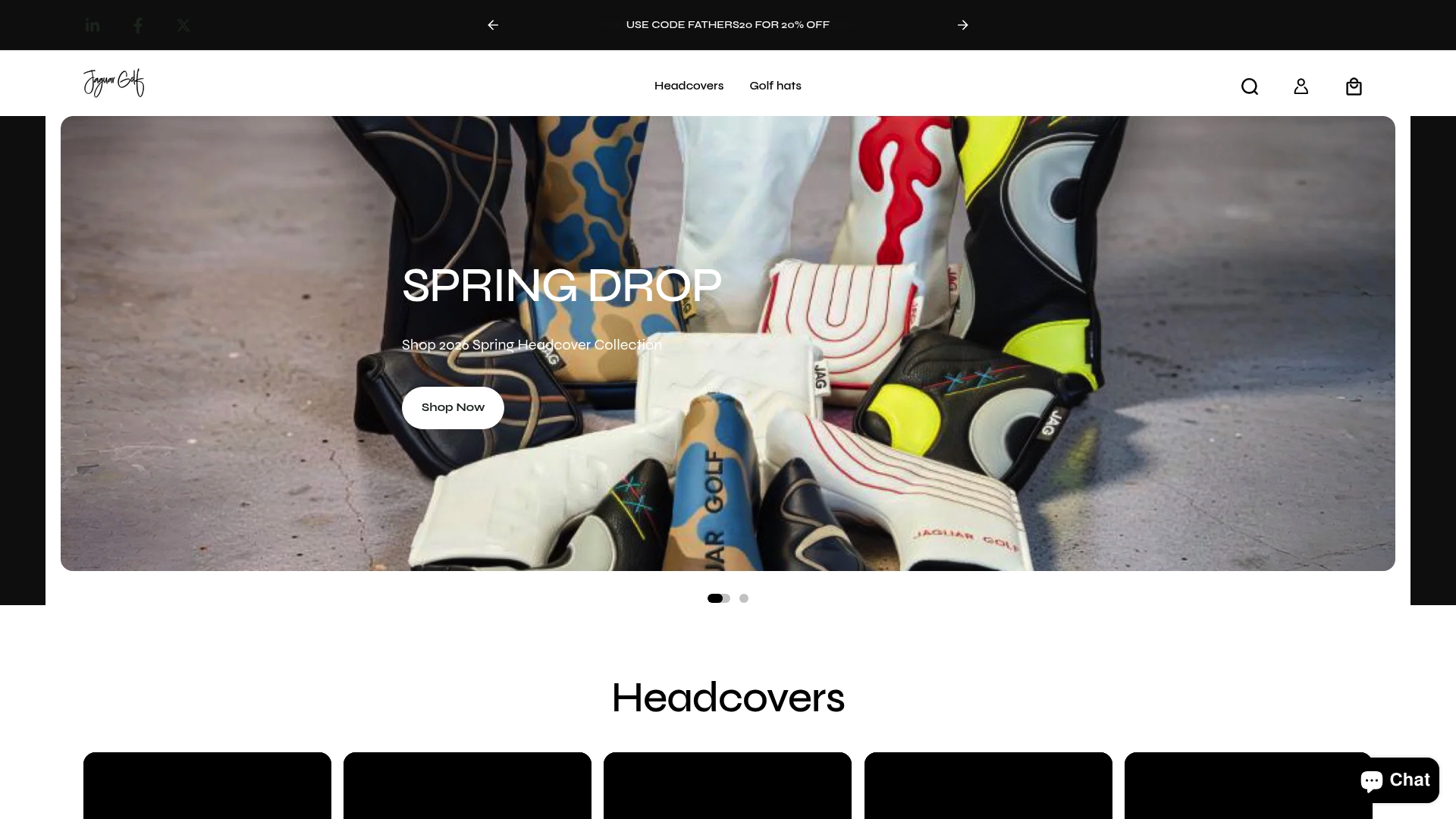
Jaguargolf doesn’t sell yardage books, but it sells the gear that makes carrying one worthwhile: durable headcovers with personalized designs for drivers, fairway woods, and putters, plus hats built for long rounds in the sun. Browse the full accessory lineup to see current stock and shipping details, and check the golf gear guide for how these pieces work together on course. If you’re ordering a custom yardage book this week, pair it with a headcover set that’ll last as many seasons as the book itself. Order your gear now and have it ready before your next tee time.
Recommended
- Custom Golf Headcovers: The Complete Guide to Personalized Club Covers – Jaguar Golf
- The Complete Golf Gear Guide: Everything You Need to Play Your Best Ga – Jaguar Golf
- Golf Accessories Guide 2026: Headcovers, Hats & Everything Your Bag Ne – Jaguar Golf
- Pop Art Golf Design: Style, History, and How to Use It – Jaguar Golf


