

The best way to protect woods in wet weather rounds is to build one repeatable system: a rain hood over the bag, an umbrella for shelter, a dry “golden” towel reserved only for grips, a grab-and-go swing technique, and a rain glove that performs when soaked. That combination is exactly what PGA TOUR caddies rely on, and Rule 4.3 permits every piece of it.
- Rain hood or waterproof bag cover to block moisture at the source
- One workhorse towel for the clubhead, one “golden” towel kept bone dry for grips
- A rain glove designed to hold traction wet
- A quality headcover (like those from Jaguargolf) sized snug on your driver and fairway woods
Why bother with all this for a few wet holes? Because water finds its way into hollow clubheads through tiny openings near the hosel, and once it does, it can shift the head’s internal weighting and start breaking down the glue bond under your grip. That’s not a cosmetic problem. It’s a performance and durability problem that shows up weeks later as a grip that twists mid-swing.
Key Takeaways
Keeping drivers and fairway woods dry during a wet round comes down to one repeatable system: shelter, dry towel rotation, grab-and-go technique, and a snug rain-ready headcover.
| Point | Details |
|---|---|
| Build a towel hierarchy | Keep one “golden” towel bone dry under the umbrella strictly for grips. |
| Follow the grab-and-go sequence | Tuck the grip under a waterproof jacket while walking to the ball to limit exposure. |
| Check Rule 4.3 compliance | Towels and gloves are permitted, but apparel can’t act as a permanent grip aid. |
| Dry clubs fully post-round | Tip clubs upside down and air out the bag for 24 to 48 hours before storing. |
| Choose a snug, sealed headcover | Jaguargolf’s fairway wood covers seal at the hosel to block water before it reaches the head. |
Table of Contents
- What to pack in your bag for a rain-ready round
- How do you keep a wood dry during the swing?
- Which headcover materials actually block rain?
- What do you do when a club or glove gets soaked mid-round?
- How should you dry and store woods after a wet round?
- Jaguargolf headcovers built for wet-weather protection
- Gear Up for the Next Wet Round with Jaguargolf
- Sources
What to pack in your bag for a rain-ready round
Pack with roles in mind, not just items. A rain hood or fully waterproof bag comes first. It’s the single upgrade that cuts club exposure more than anything else you carry, according to CaddieHQ’s wet-weather guidance.
From there, build out the rest of the kit:
- Umbrella: go big. A large canopy shelters you, your bag, and your swing motion without flipping in wind.
- Towels (2 to 3): one for wiping clubheads after each shot, one reserved strictly dry for grips, and a spare shammy for standing water on the ball or clubface.
- Rain gloves: a material built to grip wet, not just resist water, matters more than the price tag.
- Waterproof footwear and spare socks: wet feet wreck tempo long before wet hands do.
- Headcovers for every wood: snug fit over the crown, not loose enough to flap.
- A small zip pouch for valuables: phone, scorecard, tees.
Pro Tip: Skip the ziplock bag for spare gloves. Sealed plastic traps condensation, and that trapped moisture can spread to gloves that were dry when you packed them. A small mesh or breathable pouch clipped inside the rain hood keeps spares usable all round.
How do you keep a wood dry during the swing?
The sequence matters as much as the gear. Here’s the play-by-play caddies use to get a club from bag to ball and back without soaking the grip:
- Pull the club under the umbrella canopy, not out in the open.
- Tuck the grip against your body under a waterproof jacket as you walk to your ball.
- Give the grip a final wipe with your golden towel right before address.
- Put on your rain glove just before the swing, not earlier.
- Wipe the clubface and sole with your workhorse towel immediately after contact.
- Re-sheath the head in its cover before walking to your next shot.
Caddies add a layer most amateurs skip: they angle the umbrella to shelter the open top of the bag itself, and they loop one towel under the umbrella’s ribs so it never gets rained on directly. That looped towel becomes the “golden” one. A bag cover stays cinched over the top the entire walk between shots, only coming off when a club is needed.
Extra dry towels, a bag cover, and a large umbrella are the three tools caddies treat as non-negotiable in the rain. Looping a towel under the umbrella keeps at least one towel guaranteed dry for the whole round.
None of this bends the rules. Rule 4.3 allows towels and gloves freely. It only draws a line at using apparel as a permanent grip aid, like wrapping a sleeve around the shaft. Wiping and wearing gear stays fully legal.
Pro Tip: Assign the umbrella hand and the towel hand before your round starts. Fumbling for both mid swing costs more time than the extra ten seconds of prep.
Which headcover materials actually block rain?
Not all “water resistant” headcovers behave the same on a soaked back nine. The materials that matter fall into a few categories:
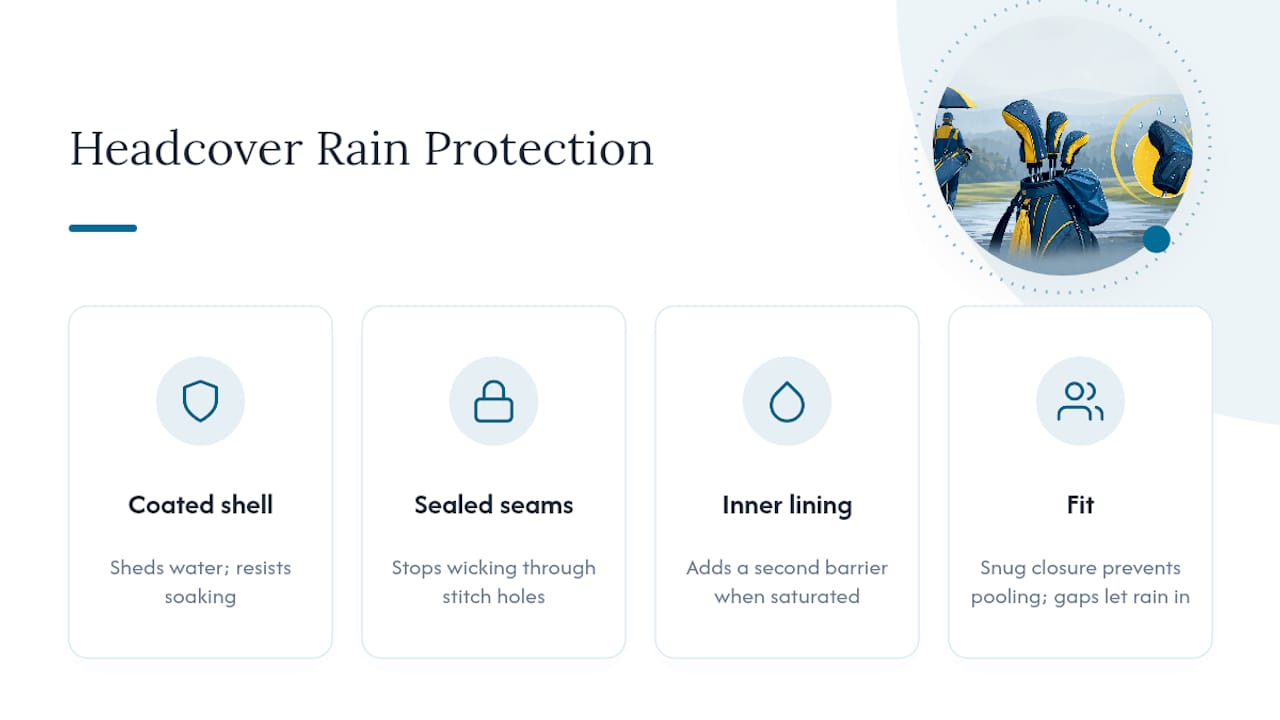
A coated nylon or PVC-treated outer shell sheds surface water and resists soaking through, unlike raw cotton or untreated polyester, which absorb and hold moisture against the clubhead. Sealed seams stop water from wicking in through stitch holes, a weak point on cheaper covers. A water-resistant lining adds a second barrier if the outer shell does get saturated during a long downpour.
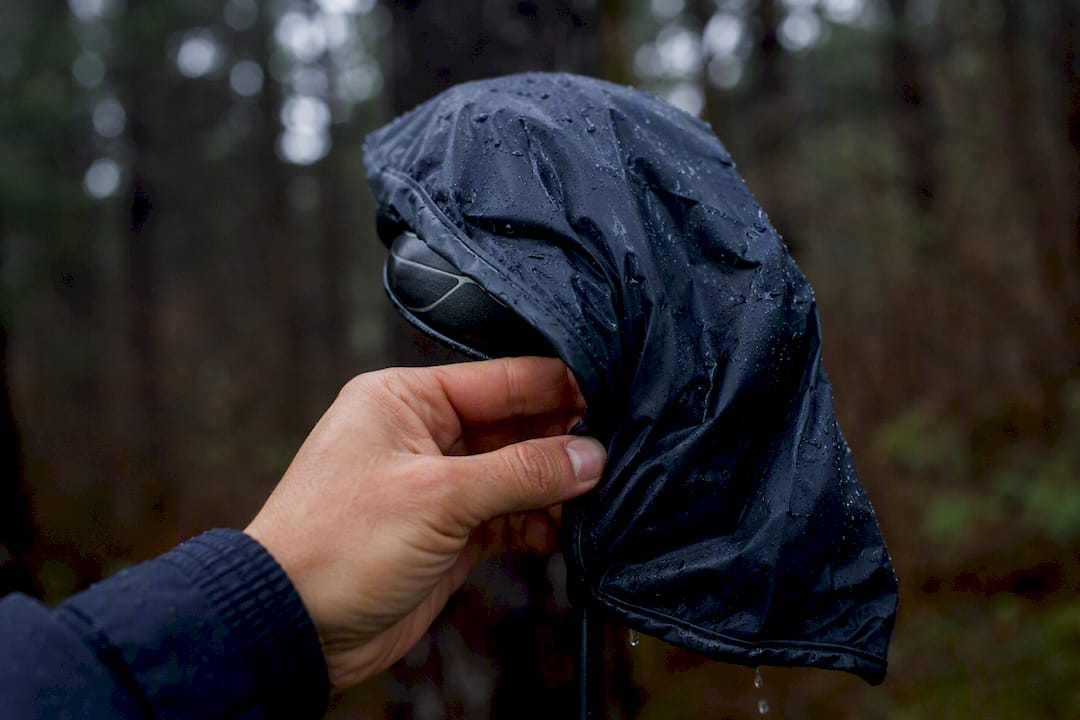
Fit matters just as much as fabric. A snug cover that hugs the crown and clears the heel-to-toe profile keeps water from pooling in loose fabric folds. A cover cut too generously to accommodate any shaft adapter tends to gap at the opening, letting rain drip straight down to the hosel, exactly where water already sneaks into hollow heads.
Coated fabrics weigh slightly more and breathe less than mesh alternatives, but breathability matters far less than water rejection when the forecast calls for rain. For a fair-weather cover, you’d weigh that tradeoff differently.
Pro Tip: Test fit before you buy: the cover should close fully around the hosel without straining the closure, and it should slide off in one motion, not require wrestling. A cover that fights you on the tee will get left off after hole three.
What do you do when a club or glove gets soaked mid-round?
Wet gear mid round doesn’t have to sink your scorecard. Move fast through this sequence:
- Swap to your spare rain glove immediately. Don’t try to play a wet hole in a saturated glove.
- Grab the golden towel for the grip, and only that towel.
- Tuck the grip under your jacket for the walk to the next shot.
- If every towel feels damp, wring the driest one and rotate to a fresh dry patch rather than reusing the same soaked spot.
- Run a shammy over a waterlogged clubhead to pull surface water off before it works into the hosel gap.
Keep one towel inside the rain hood at all times, untouched until you truly need a guaranteed-dry option.
Pro Tip: If a head feels like it’s sloshing, tip the club upside down for a few seconds between shots to let trapped water drain through the grip butt hole. Don’t keep playing it if the sloshing gets louder. Bench that club for the round and let it dry fully before next use.
How should you dry and store woods after a wet round?
The habit that saves the most equipment value happens after you leave the course, not during it. Pull every club out of the bag the moment you get home, wipe heads and shafts dry, then stand each club upside down for a few minutes so any trapped water can drain through the grip end.
Let the bag and clubs air out for 24 to 48 hours before you zip everything back up. Hang your rain jacket, gloves, and shoes separately, since packing them wet against your clubs just reintroduces the moisture you spent all afternoon fighting.
Storing wet clubs in a closed bag, or leaving that bag in a hot car trunk overnight, does more long-term damage than the rain round itself. Trapped moisture combined with heat accelerates grip breakdown and can encourage rust on unprotected metal.
Skip the machine dryer for gloves and headcovers unless the product label explicitly allows it. Watch for warning signs over the following weeks: a grip that feels slick even when clean, a persistent sloshing sound in the head, or a cracked ferrule at the hosel. Any of those calls for a trip to your pro shop for inspection before the club sees another wet fairway.
Jaguargolf headcovers built for wet-weather protection
For the headcover itself, Jaguargolf makes a few specific options worth putting on your driver and fairway woods before the next forecast turns gray.
- Smog Pop Fairway Wood Cover for a snug, protective fit with bold styling that doesn’t sacrifice coverage.
- Tactical Camo Fairway Wood Cover for golfers who want a rugged, durable shell over the crown.
- Graffiti Reign Fairway Wood Cover for a distinctive look paired with the same protective construction.
- Tactical Camo Mallet Putter Cover as a matching accessory to round out bag protection beyond just the woods.
Each is built with a snug profile designed to seal around the hosel and shaft adapter rather than gap open, and the stitching and fabric choices reflect Jaguar Golf’s focus on craftsmanship alongside style. Caring for them is simple: wipe down after wet rounds, air dry fully before storing, and avoid balling them up damp inside a closed bag pocket.
If you’re outfitting your bag for the first time, start with covers for your driver and 3 wood, the two clubs that see the most swings and the most rain exposure in a typical round. Check the sizing details on Jaguar Golf’s product pages before ordering to match your specific head profile.
Pro Tip: Order your fairway wood cover slightly snugger than you think you need. A tight cover keeps its shape and seal over a season of use; a loose one stretches and starts gapping at the exact seams where rain gets in.
A craftsman’s take on wet-round protection
Designing headcovers means thinking about the worst day a club will see, not the best one. Every stitch line and closure on a Jaguargolf cover gets built with rain, mud, and cart-path grit in mind, not just a dry range session. That’s the standard we hold the materials to before a design ever ships.
Golfers who’ve stuck with us through soggy seasons keep coming back for the same reason: the cover still fits right and still keeps water out after a full year of wet rounds, not just the first one.
Gear Up for the Next Wet Round with Jaguargolf
You don’t need to gamble on a generic cover that gaps at the hosel or fades after one soggy season. Jaguargolf builds headcovers specifically for golfers who play through real weather, not just fair-weather rounds, with snug-fitting designs and durable materials that hold their seal over time.

If you’ve read this far, you already know the drill: a rain hood, an umbrella, a dry towel, and a headcover that actually protects the crown and hosel. The last piece is the easiest to fix today. Browse the Jaguargolf headcover lineup and outfit your driver and fairway woods before the next forecast turns against you. Golfers who bet on the outcome of wet rounds might also find golf-focused picks at Manny’s Variety Picks worth a look, but for protecting the clubs themselves, start with a cover built for the job.
Sources
- USGA — Equipment rules (Rule 4.3) guidance
- Playing in the rain: PGA TOUR caddies speak on how to keep grips from getting wet
- Golf Digest — Rain golf rounds checklist
- Can golf clubs get wet? — CaddieHQ


