

Four material families dominate premium driver headcovers: full-grain or Nappa leather, PU or synthetic leather, heavy polyester such as 900D, and knit or neoprene. Choose leather for luxury appeal and patina, PU for a polished low-maintenance look, 900D for abrasion resistance and custom embroidery, and knit or neoprene for stretch and heritage styling. Interior lining and seam construction matter as much as the outer shell.
TL;DR:
- Full grain and pull up leather develop patina and need conditioning; choose PU or heavy polyester if you want a consistent appearance with little upkeep.
- Heavy polyester such as 900D resists scuffs and holds embroidery well, while knit stretches across head sizes and neoprene fits snugly but can trap moisture.
- A soft velour or microfleece lining protects club finishes, while reinforced or taped seams at the shaft opening reduce the risk of failure.
- PU quality varies by formulation: lower grade coatings may peel after repeated flexing, so inspect for an even finish and flexibility without cracking.
- Abrasion ratings compare products only under specific test conditions; they do not predict lifespan, so check which protocol produced any durability figure.
Table of Contents
- Premium material families: a quick comparison
- Leather types: full-grain, Nappa, pull-up, and what they mean for durability
- PU and synthetic leather: what separates high-end faux leather from the rest
- Heavy polyester: 900D and similar deniers for abrasion resistance and customization
- Knit, wool, and neoprene: stretch, fit, and heritage style
- Interior and construction details that determine real-world protection
- Buyer evaluation checklist: how to inspect a premium headcover before you buy
- How we choose materials at Jaguar Golf
- Why build quality often matters more than the material name
- Jaguar Golf driver headcovers built to these standards
- FAQ
- Sources
Premium material families: a quick comparison
Each material family serves a different buyer priority. Full-grain and Nappa leather deliver a natural hand, structural strength, and a surface that changes character over time. PU or synthetic leather replicates a leather look with more consistent shape and lower upkeep. Heavy polyester, often 900D, resists scuffs and holds embroidery detail well, which makes it a common choice for customized covers. Knit, wool, and neoprene prioritize stretch and fit over rigidity, and they tend to carry a heritage or classic look.
Buyers weighing these options are really weighing four variables: protection, weather resistance, maintenance, and style.
- Protection: dense polyester and treated leather resist surface abrasion better than untreated or thin materials.
- Weather resistance: PU and treated leather shed moisture more consistently than untreated knit.
- Maintenance: PU and polyester need little upkeep, while leather benefits from conditioning.
- Style: leather and Nappa finishes carry a luxury look; knit and wool carry a heritage look.
Quality varies inside every one of these categories. Material testing from 2025 shows that even within the PU category, tensile and tear strength depend heavily on formulation and fabrication, so the label on a product page tells you less than the construction behind it.
Leather types: full-grain, Nappa, pull-up, and what they mean for durability
“Leather” is not one material. Full-grain leather retains the hide’s natural surface, including its grain pattern, and it carries the most structural strength of the common leather grades. Top-grain leather is sanded and refinished for a more uniform look, trading some natural texture for consistency. Corrected-grain leather goes further, with an embossed or synthetic finish applied over a lower-grade hide, which reduces both cost and durability. Nappa leather is a drum-dyed, softer finish often applied to full-grain or top-grain hides, prized for a supple feel rather than raw toughness. Pull-up leathers use an oil or wax finish that lightens when stretched or flexed, which is part of why they develop visible character with use.
Patina is the visual record of that use. Full-grain and pull-up leathers darken, soften, and pick up small marks as they age, and that is the expected behavior rather than a flaw. A Nappa finish tends to show less dramatic patina because the drum-dyeing process evens out color variation from the start. Buyers who want a cover that looks the same in year three as it did on day one should lean toward PU or heavy polyester instead.
A few inspection points separate a genuine premium leather cover from a thin imitation:
- Hide thickness: a substantial hide resists punctures and holds its shape at the shaft opening.
- Finished edges: burnished or painted edges indicate attention to detail and resist fraying.
- Stitching consistency: even, tight stitching along stress points signals quality assembly.
- Water-resistance treatment: a conditioned or treated finish helps leather resist moisture without stiffening.
Golf Monthly’s coverage of premium headcovers notes that full-grain leather is typically chosen for natural texture and long-term character, while Nappa leather is chosen for a softer luxury hand, confirming that “leather” alone does not guarantee a premium build.
Pro Tip: Ask for a close-up photo of the shaft opening edge. Raw or fraying edges there usually mean a thinner hide or a corrected-grain finish rather than full-grain leather.
PU and synthetic leather: what separates high-end faux leather from the rest
Premium PU and synthetic leather covers are built from a microfiber or textile substrate coated with a waterborne polyurethane layer. That coating is what gives PU its leather-like surface and its water resistance, and it is also where quality varies the most. 2025 testing published in the Journal of the American Leather Chemists Association measured one waterborne-PU microfiber formulation with tensile strength and tear strength values indicating variability in performance depending on formulation, and the same research found that formulation differences between PU products drive real performance variability. Two covers both marketed as “PU leather” can behave very differently under stress.
The most common failure mode for lower-grade faux leather is not a sudden tear but a slow visual breakdown. A case study from Illinois State University found that some PU-coated faux leathers passed flat and flex abrasion cycles in testing but still showed severe surface peeling after repeated flexing. That matters for buyers because a product can technically meet an abrasion benchmark and still look worn within a season. For a closer comparison between PU and genuine leather construction, see our breakdown of PU leather versus genuine leather headcovers.
A few signals point to a higher-quality PU build:
- Even coating with no visible seams in the finish: a uniform surface suggests better substrate bonding.
- Flexibility without cracking at fold points: stiff or crackling material at the seams often signals a thin or brittle coating.
- Semi-perforated or textured finishes: these are common on higher-end synthetic covers and often pair with better substrates, per Golf Monthly’s product examples.
Heavy polyester: 900D and similar deniers for abrasion resistance and customization
Dense polyester, often listed as 900D (900 denier), is a woven fabric built for abrasion resistance rather than a luxury hand. The tight weave resists scuffs, snags, and repeated bag contact better than most thin fabrics, which makes it a practical choice for golfers who carry their bag in and out of a car trunk or cart storage multiple times a week. The same tight weave also holds embroidery detail cleanly, which is why 900D and comparable fabrics show up often on customized or logo-heavy covers.
The trade-off is in feel and appearance. Heavy polyester does not develop the patina or soft hand of leather, and it will not carry the same luxury look on a pro shop shelf. What it offers instead is consistency: the cover looks and performs the same after heavy use as it did new, with minimal care required.
- Best fit for: golfers who prioritize durability and custom embroidery over a leather look.
- Care: wipe clean, no conditioning needed.
- Trade-off: less visual luxury, more day-to-day toughness.
For buyers specifically weighing personalization options, our guide to custom golf headcovers walks through how material choice interacts with embroidery and design options.
Knit, wool, and neoprene: stretch, fit, and heritage style
Knit and wool covers trade rigidity for stretch and warmth, and they carry a classic, traditional look that leather and polyester do not replicate. A knit cover stretches to fit a range of driver head sizes, which can be an advantage for golfers who switch drivers across seasons. Wool specifically carries a heritage association with classic-era golf equipment, and it remains a style choice as much as a functional one.
Neoprene takes a different approach: it is a synthetic rubber material that stretches snugly around the clubhead, creating a tight seal that resists light moisture better than open-knit fabrics. The trade-off is breathability. A snug neoprene fit traps more moisture against the clubhead finish than a looser knit cover would, so drying the cover and club fully after a wet round matters more with neoprene than with other materials.
- Knit and wool: best for classic styling and flexible fit across head sizes.
- Neoprene: best for a snug, protective fit with light moisture resistance.
- Care for both: air dry fully after exposure to rain or heavy dew to avoid trapped moisture.
Buyers curious about how knit materials behave under repeated stretching and washing can find comparable fabric science in an analysis of merino versus bamboo knit performance fabrics, which covers similar stretch-and-care trade-offs in a different product category.
Interior and construction details that determine real-world protection
The outer material gets most of the attention, but the interior lining and seam construction often decide whether a headcover actually protects a club finish over years of use. A hard or coarse interior can scuff a clubhead’s finish even if the outer shell is flawless, which is why lining choice matters as much as shell material.
- Lining material: velour or microfleece linings are standard on premium covers because the soft nap protects painted and finished surfaces without abrasion, a detail confirmed across Golf Monthly’s product examples.
- Seam reinforcement: taped seams and bartacking at stress points, particularly around the shaft opening, prevent the most common failure point on a headcover: a blown seam from repeated insertion and removal.
- Closure design: snap closures are quick but can loosen over time, elastic openings flex to fit multiple head sizes but can stretch out, and full-wrap closures offer the most secure fit at the cost of a slower on-and-off motion.
When a product page cites an abrasion-cycle number, that figure deserves context rather than blind trust. ASTM D7255, the standard rotary-platform abrasion test for leather, states plainly that abrasion resistance results are comparative rankings, not lifetime guarantees, because abradant type, applied pressure, specimen mounting, and finish all affect the outcome.
Abrasion testing is comparative, not absolute: ASTM D7255 confirms that cycle counts depend on test conditions and finish, so a higher number only means better performance under that specific test setup, not a guaranteed real-world lifespan.
Buyer evaluation checklist: how to inspect a premium headcover before you buy
Comparing listings gets easier with a short, repeatable checklist rather than relying on marketing language alone.
- Outer material subtype: confirm whether it is full-grain, top-grain, Nappa, PU, or a specific denier of polyester, not just “leather” or “synthetic.”
- Lining: look for velour or microfleece rather than a bare or stiff interior.
- Seams: check photos for reinforced or taped seams at the shaft opening and side panels.
- Closure type: decide whether a snap, elastic, or full-wrap closure fits your routine.
- Abrasion or durability claims: ask what test protocol produced any cited number, per ASTM D7255 guidance.
- Care instructions: confirm whether the material needs conditioning (leather) or just wiping (PU, polyester).
- Warranty or return policy: verify what recourse exists if stitching or coating fails early.
Weighing patina against low maintenance comes down to how the cover will be used: a leather cover that develops character over years suits a golfer who treats gear as an investment piece, while PU or polyester suits a golfer who wants consistent looks with no upkeep. For a closer look at matching a cover to specific driver and fairway wood needs, see our guide to what actually works for driver and fairway headcovers.
Pro Tip: Request a photo of the interior lining before buying online. A bare or stiff interior is the clearest sign of a corner-cut construction, regardless of how premium the outer shell looks.

How we choose materials at Jaguar Golf
We specialize in premium golf accessories, focusing on distinctive headcovers and hats designed to elevate a golfer’s style while protecting clubs from everyday wear. We build toward the same standards covered above: material subtype, lining quality, and seam construction, because a cover that looks premium but fails to protect a clubhead finish solves nothing. Our designs address a common problem in the category, where covers that look the part on a product photo fail to safeguard valuable equipment once they see real use.
Our approach combines personalized design options with attention to craftsmanship details that do not show up in a thumbnail image, such as lining choice and reinforced stitching. Our catalog is for golfers who want to express individual style without treating protection as an afterthought, and every product line reflects consistent material and construction standards.
Why build quality often matters more than the material name
In my view, the material label on a headcover tells you less than people assume. I recommend leather for golfers who want a cover that ages with character and don’t mind occasional conditioning, PU for anyone who wants a leather look with near-zero upkeep, heavy polyester for golfers who are hard on their gear or want custom embroidery, and knit or neoprene for golfers chasing a classic look or a snug seasonal fit. What I keep coming back to is this: a well-built PU cover will outlast a poorly built leather one every time, so judge the stitching and lining before you judge the material name on the label.
— Josh
Jaguar Golf driver headcovers built to these standards
We design our driver headcovers with priorities such as a durable outer shell, a protective lining, and reinforced seams that hold up to daily use. Whether you lean toward a polished synthetic finish or a rugged, abrasion-resistant build, our driver headcovers collection gives you a direct way to compare options built to those specifications.
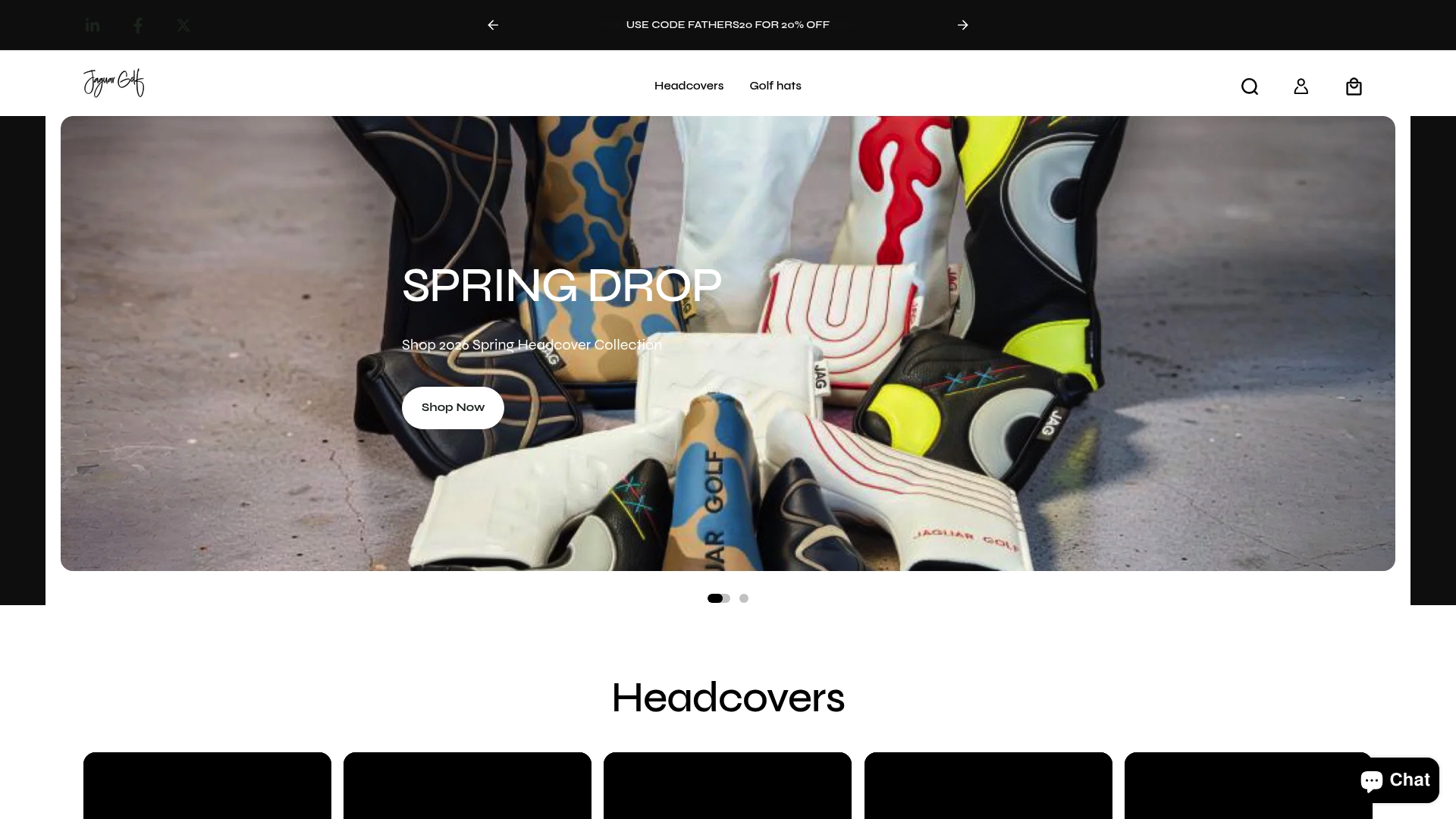
Browse the current lineup, check the material and lining details on each product page, and pick the build that matches how you actually use your clubs.
FAQ
What is the most durable material for a driver headcover?
Heavy polyester such as 900D tends to resist everyday abrasion and scuffing better than leather or lighter knit fabrics, which is why it’s common on covers built for frequent bag use. Treated full-grain leather and high-quality PU can also hold up well, but abrasion resistance depends heavily on test conditions and finish, not the material name alone.
Does PU leather crack or peel over time?
Lower-quality PU coatings can peel or crack with repeated flexing, a failure mode confirmed by a case study testing faux leather samples, even when the material passed standard abrasion cycle counts. Higher-quality PU formulations with better substrate bonding resist this failure mode more consistently.
How do I know if a headcover uses genuine full-grain leather?
Check for a thick hide, finished or burnished edges, and visible natural grain texture rather than a uniform embossed pattern, which usually signals corrected-grain leather instead. Full-grain and Nappa leathers are typically called out by name on premium product pages, as noted in Golf Monthly’s coverage of headcover materials.
What does an abrasion test rating actually tell me about a headcover?
An abrasion rating, such as one measured under ASTM D7255, provides a comparative ranking under specific lab conditions, not a guarantee of how long a product will last in daily use. The test result depends on the abradant, pressure, and specimen mounting used, so it’s worth asking what protocol produced any cited number.
Is a knit or neoprene headcover a good choice for everyday use?
Knit and wool covers offer stretch and a classic look but less abrasion resistance than dense polyester, while neoprene offers a snug protective fit with moderate moisture resistance. Both suit golfers prioritizing fit and style over maximum durability, and both benefit from full air drying after exposure to rain.
Sources
- Journal of the American Leather Chemists Association (JALCA) — 2025 leather/PU material data
- Illinois State University — case study of faux leather durability and abrasion
- ASTM D7255 — Standard test method for abrasion resistance of leather (rotary platform abraser)
- Golf Monthly — examples and discussion of premium headcover materials


