

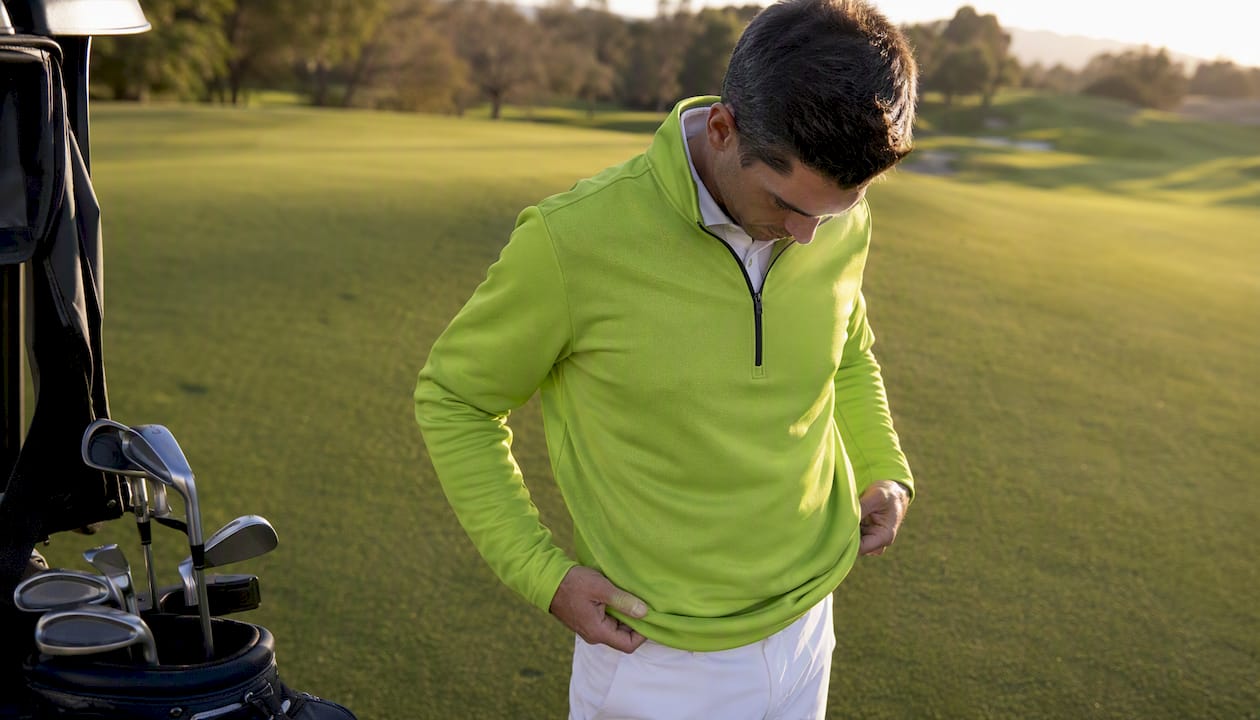
Statement golf gear is any apparel or accessory bold enough to become the focal point of your outfit on the course, worn deliberately to express your personality instead of blending in. Think a lime-green quarter-zip on an otherwise gray day, a headcover shaped like a tiger, or argyle socks loud enough to draw a comment on the 3rd tee. The styling rule behind almost every good example: pick one statement piece and let the rest of your outfit go quiet. That single restraint is the difference between “bold” and “busy.”
Key Takeaways
Statement golf gear is any bold apparel or accessory chosen to express personal style, styled correctly by pairing one loud piece with a neutral outfit.
| Point | Details |
|---|---|
| Define the term | Statement gear is any apparel or accessory bold enough to stand out and express personal style. |
| Follow the one-piece rule | Choose a single statement item and keep everything else in your outfit neutral. |
| Know the rules boundary | Accessories like headcovers and hats fall outside USGA/R&A equipment rules, which only govern clubs and balls. |
| Buy for durability | Look for colorfast dyes, reinforced stitching, and magnetic closures so bold designs hold up over seasons. |
| Care for bold colors | Hand wash in cold water and air dry out of direct sunlight to prevent fading. |
| Start small | A single headcover or hat is the lowest-risk way to test whether statement gear fits your style. |
Table of Contents
- What Does Statement Golf Gear Mean in Practice?
- How Do You Wear Statement Golf Gear Without Overdoing It?
- Why Do Golfers Choose Bold, Standout Gear?
- Are Statement Accessories Legal? What USGA and R&A Rules Actually Cover
- What Should You Look for When Buying Statement Accessories?
- Why It’s Worth Trying at Least One Bold Piece
- Frequently Asked Questions
- Sources
What Does Statement Golf Gear Mean in Practice?
The phrase gets used loosely, so it helps to pin down what actually qualifies. A statement piece is anything that pulls the eye first: unusual color, oversized graphic, unexpected material, or a shape nobody else on the range is carrying. Retailers have leaned into the term directly. Custom apparel makers now sell entire lines marketed as statement golf shirts, built around two-tone color blocking and high-contrast panels specifically designed to stand out from a standard polo rack. Divot tool sellers do the same thing, branding their state-themed designs as a way to carry a small personal flag in your pocket.
Here’s how it breaks down by category:
- Apparel: color-blocked polos, patterned quarter-zips, printed rain jackets, and socks with loud argyle or novelty prints (skulls, flamingos, state outlines).
- Accessories: headcovers shaped like animals or characters, hats with oversized front panels or unusual textures, bags in unexpected colorways, divot tools with regional or novelty designs, and gloves with contrast stitching or metallic accents.
- Novelty items: anything with a large logo, an inside joke, a patch collection, or a design tied to a hobby outside golf entirely.
Visual cues to look for when you’re shopping or scanning a photo: color blocking (two or three high-contrast panels instead of one solid tone), oversized graphics that read from ten feet away, unusual textures like quilted fabric or faux fur on a headcover, and scale that breaks the golf-normal pattern of small logos and muted plaids. If you’re pairing a photo with copy for a lookbook or product page, the caption should point straight at the contrast: “notice how the driver cover’s orange stitching pops against a plain white bag” does more work than a generic “bold design.”
How Do You Wear Statement Golf Gear Without Overdoing It?
Styling statement gear is less about taste and more about math: one loud item, everything else quiet. Here’s the sequence that works.
- Pick your one statement piece first. Decide before you get dressed whether the loud item is your shirt, your hat, or an accessory like a headcover, and build outward from it.
- Neutralize everything else. If your polo is the statement, wear solid-color pants or shorts and simple shoes. If your headcovers are the statement, keep your outfit in one or two neutral tones.
- Match scale to placement. A large graphic works better lower on the body (pants, socks) or on gear that stays off your torso (headcovers, bags) than as an oversized chest logo competing with your face.
- Coordinate metals and leathers. If your belt buckle is silver, keep your watch and shoe eyelets silver too. Small mismatches like this read as sloppy even when the big pieces are right.
- Check the shoe-sock pairing last. Loud socks need a plain shoe. A patterned shoe needs a plain sock. Never run both loud at once.
A few quick do’s and don’ts:
- Do let your headcovers or bag carry the personality if your clothing budget is limited. They’re the cheapest way in.
- Do repeat one accent color across two items (say, a lime accent on your glove and your ball marker) to tie a look together without adding a second statement.
- Don’t stack two large logos in the same outfit. Pick a chest logo or a hat graphic, not both.
- Don’t mix more than two bold patterns (plaid pants with a plaid hat is one pattern too many).
Pro Tip: Visual weight sits heaviest at eye level and lowest at your feet, so a statement worn near your face (a hat, a bold collar) reads louder than the same design on a sock. If you want a “loud but subtle” effect, push your statement piece down to shoe or accessory level instead of up to your shoulders.
For a deeper look at pairing accent colors across a full outfit, Jaguargolf’s color guide breaks down seasonal palettes that keep a statement piece from clashing with the rest of your bag.
Why Do Golfers Choose Bold, Standout Gear?
The motivations behind statement gear rarely have anything to do with performance. They’re personal.
- Confidence: a bold piece can make you feel sharper standing over a putt, even if it has zero effect on your swing.
- Identity signaling: golfers use gear the way people use bumper stickers, to announce a hometown, a school, or a sense of humor before they’ve said a word.
- Team and event themes: club tournaments, buddy trips, and charity scrambles have turned matching or contrasting statement pieces into a running joke among regular groups.
- Social visibility: a distinctive headcover or hat photographs well, and golfers increasingly dress with that audience in mind.
There’s a real industry shift behind this. Better printing and fabrication technology has made it easier and cheaper to produce bold, durable designs that used to be expensive or impossible at scale, and golf apparel coverage has started describing the result as wearable works of art rather than just clothing. That shift shows up off the fairway too. Sports Illustrated has covered how hip-bag designs have become status symbols in golf culture, proof that accessories, not just apparel, now carry social weight. All of this feeds directly back into the one-statement-piece rule from the last section: the more expressive the gear gets, the more discipline it takes to keep one piece from turning into three.
Are Statement Accessories Legal? What USGA and R&A Rules Actually Cover
Here’s where a lot of golfers get nervous for no reason: statement gear and rules conformance are almost entirely separate conversations. Rule 4 of the Rules of Golf governs the player’s equipment, and it covers clubs, balls, and anything that gives “artificial help” to your play, including limits on the number of clubs allowed in a bag and requirements for conformity. A headcover, a hat, or a pair of loud socks doesn’t touch any of that, because none of it affects how the ball leaves the club or how you strike it.
The R&A draws a clear line between carrying something and using it to alter play. You’re allowed to carry a non-conforming club in your bag, but you cannot make a stroke with it, and altering a club’s face or components mid-round to change how it performs is what actually crosses into violation territory. A tiger-print headcover changes nothing about how your driver performs. Sanding a clubface to add spin does. That’s the entire distinction in a sentence.
If you ever want to verify whether a specific club or ball is approved, the USGA maintains an Equipment FAQ along with a searchable database and a monthly-published list of conforming balls, both aimed at manufacturers and players who want certainty before a competitive round.
| Rule Area | What It Covers | Practical Takeaway |
|---|---|---|
| Conforming clubs and balls | Equipment used to make a stroke must meet USGA and R&A standards. | Accessories like headcovers or gloves are outside this rule entirely. |
| club limit | You may carry no more than 14 clubs during a round. | Extra accessories in your bag don’t count against this limit. |
| Artificial help | Equipment or substances that alter performance mid-round are restricted. | Altering a clubface or ball is a violation; a bold hat or sock is not. |
| Carrying vs. using | You can carry a non-conforming club but can’t stroke with it. | Statement gear you wear is never “used” in the rules sense. |
Scenario check: carrying a bright, novelty headcover on your driver is entirely allowed, no matter how loud the design. Applying a foreign substance to a clubface to change spin, or bending a club mid-round to alter loft, is not. One is style. The other is a rules violation. For a fuller walkthrough of how conformance works in practice, Jaguargolf’s equipment rules guide covers the technical side in plain language.
What Should You Look for When Buying Statement Accessories?
Bold design means nothing if the piece falls apart after a summer of humidity and cart-path dust. A handful of construction details separate a statement piece that lasts from one that fades by August.
- UV-resistant, colorfast dyes that won’t wash out or bleach under direct sun over a season of rounds.
- Reinforced stitching at seams and stress points, especially on headcovers that get stuffed and pulled from a bag dozens of times a round.
- Magnetic or reinforced closures on headcovers, which hold tighter than simple drawstrings and don’t loosen over time.
- Weather-resistant fabric blends for outerwear and hats that need to hold shape and color through rain and heat alike.
Jaguargolf builds around exactly this balance: bold, distinctive headcover and hat designs paired with the kind of reinforced construction that keeps a driver protected on a bag that gets thrown in a trunk every weekend. Premium construction here isn’t just cosmetic. Magnetic closures and reinforced panels are what keep a striking design from becoming a loose, faded accessory by midseason, which is the whole point of buying something meant to be noticed for years, not one round.
Care is simple but easy to skip. Hand wash printed or dyed pieces in cold water, avoid direct dryer heat that can crack synthetic prints, and let bold-colored headcovers air dry out of direct sunlight to keep the dye from fading early. A few minutes of care after a round adds seasons to a piece you paid extra to stand out.
Why It’s Worth Trying at Least One Bold Piece
Most golfers overthink this. You don’t need a full wardrobe overhaul to test whether statement gear fits your game and your personality. Start with something low stakes and low cost: a single bold headcover or a distinctive hat is the easiest entry point, because it sits outside your actual outfit and never risks clashing with what you wore that day.
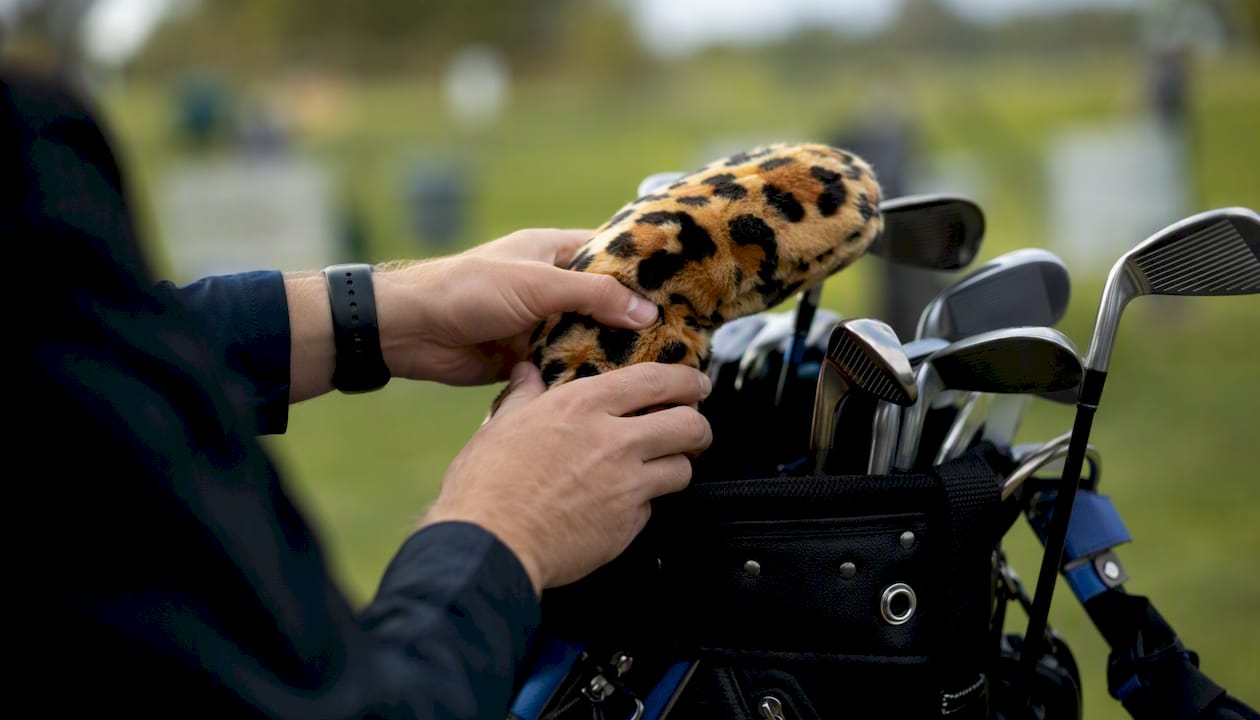
The golfers who get the most out of statement gear are usually the ones who committed to one piece and let it do the work, rather than trying to overhaul their whole look at once. A driver headcover you actually like looking at in your bag is a small, cheap experiment with almost no downside. If it doesn’t feel like “you,” swap it out. If it does, that’s usually the signal to build outward from there.
Frequently Asked Questions
What does statement golf gear mean? It refers to any apparel or accessory chosen specifically to stand out and express personal style, rather than blend into a traditional golf outfit.
Is statement golf gear the same as golf fashion? Not exactly. Golf fashion covers your whole look, while statement gear refers specifically to the one bold piece meant to anchor that look.
Can I wear a loud headcover in a sanctioned tournament? Yes. Headcovers are accessories, not regulated equipment, so their design has no bearing on rules conformance under the R&A’s equipment rule.
How many statement pieces should I wear at once? One. Wearing two or more bold items at the same time usually reads as cluttered instead of intentional.
Do statement accessories affect how a club performs? No. A headcover, hat, or glove design has no effect on how a club or ball performs, which is why they sit outside USGA and R&A conformance rules entirely.
Sources
- The Player’s Equipment — The R&A
- Wearable works of art: how printing tech is inspiring golf style — Golf Digest


