

Limited edition golf gear is defined as equipment and accessories produced in capped quantities, featuring unique designs, premium materials, or brand collaborations that distinguish them from standard catalog offerings. Prices range from around $40 for exclusive hats to over $700 for premium putters, making the types of limited edition golf gear accessible at nearly every budget level. The market in 2026 has shifted toward capsule collections that bundle clubs, apparel, and accessories into single themed releases. Collectors and enthusiasts now treat these drops as both playable equipment and long-term investments.
1. What types of limited edition golf clubs are most popular?
Limited edition clubs fall into three main categories: putters, wedges, and irons. Each category uses different techniques to justify the premium price and limited production run.
Putters represent the most collectible club category. The Odyssey Damascus Milled putter is a clear example. It features Damascus steel sole plates with unique patterns on every unit, meaning no two putters look identical. That manufacturing rarity goes beyond cosmetics. It reflects a genuinely difficult production process that standard putters skip entirely.

Wedges attract collectors who want performance and scarcity together. Cleveland produced a limited run of 588 sets of their Tour Action wedges, tying the production number directly to the model name. That kind of explicit scarcity signals long-term resale value before the product even sells out.
Irons round out the club category. Titleist released T-Series irons in an Oil Can PVD finish for 2026, a coating that darkens over time and develops a patina unique to each golfer’s use. Bettinardi’s HLX 6.0 wedges use a Molten Copper finish that behaves the same way.
- Putters: Damascus steel, milled faces, unique sole patterns
- Wedges: PVD coatings, copper plating, production-capped sets
- Irons: Oil Can finishes, special ferrules, engraved detailing
Pro Tip: When evaluating a limited edition club, check whether the finish is purely cosmetic or tied to a unique manufacturing process. Material-based rarity holds resale value better than paint or decal treatments.
2. How limited edition headcovers and hats build a collection
Limited edition headcovers and hats serve a dual purpose. They protect equipment and signal identity on the course. That combination makes them the most accessible entry point into collectible golf gear for most golfers.
Headcovers in limited runs typically use premium materials like full-grain leather, woven textiles, or embroidered panels. Artist collaborations drive much of the design work, with some releases featuring original artwork licensed for a single production run. Once that run sells out, the design disappears permanently. That permanence is what separates a limited headcover from a standard catalog item.
Hats follow a similar pattern. Limited edition patch hats, for example, use woven or embroidered patches that reference specific tours, courses, or cultural moments. Jaguargolf produces patch hat collections with exactly this approach, combining quality construction with designs that won’t appear in the next season’s lineup.
Popular styles and materials in limited edition headcovers and hats include:
- Full-grain leather driver covers with embossed logos
- Woven textile mallet covers featuring artist collaborations
- Structured caps with limited-run embroidered patches
- Camo-pattern covers like the Tactical Camo Mallet Cover from Jaguargolf
- Fairway wood covers in themed colorways tied to specific events
The bundling trend matters here. Several 2026 capsule collections pair a headcover set with a matching hat and towel, creating a coordinated look that increases the perceived value of each individual piece.
3. What premium accessories appear in limited release collections?
Limited release accessories extend well beyond clubs and headcovers. The category now includes golf balls, towels, divot tools, gloves, and even watches. Each item uses design, branding, and packaging to create collectible appeal that outlasts its functional life.
Golf balls are a strong example. Special edition balls often feature unique cover graphics, foil stamping, or themed numbering tied to a tournament or anniversary. The packaging alone can become a display piece. Collectors frequently keep one sleeve sealed and play the other.
The most high-profile 2026 accessory collaboration is the TaylorMade and TAG Heuer limited edition launch, which pairs a co-branded golf watch with a matching putter and accessories set. That kind of cross-industry partnership signals how far the premium accessory market has moved from simple ball markers and divot tools.
- Special edition golf balls with foil stamping or tournament graphics
- Co-branded towels with woven logos and limited colorways
- Engraved divot tools tied to specific course or tour releases
- Limited edition gloves in premium leather with embossed detailing
- Co-branded watches paired with matching putters and gear
Pro Tip: Accessories from brand collaborations, especially those that include non-golf brands like luxury watchmakers, tend to appreciate faster than standalone golf accessories. The crossover audience drives demand beyond the golf market.
4. How exclusivity and storytelling drive value in limited gear
Exclusivity in limited edition golf gear operates on two levels: production volume and narrative. Both affect desirability, but they work differently.
Production volume is the more direct lever. When Cleveland caps a wedge set at 588 units, every collector knows exactly how rare the item is. Smaller production runs generally yield higher resale potential. That math is simple and well understood in the collector market.
Storytelling works more subtly. Custom ferrules, engraved packaging, and themed boxes transform a club from a tool into an artifact. When a wedge ships in a velvet-lined box with a numbered certificate and a story about the craftsman who finished it, the buyer is purchasing an experience, not just equipment. That narrative layer is what separates a $300 limited wedge from a $300 standard wedge in the same performance tier.
The table below shows how cosmetic and material-based limited editions differ in their value drivers.
| Feature | Cosmetic limited edition | Material-based limited edition |
|---|---|---|
| Primary value driver | Branding, design, colorway | Unique manufacturing process |
| Finish examples | Custom paint, decals, themed graphics | Damascus steel, Oil Can PVD, copper plating |
| Patina over time | Fades or chips with use | Develops unique character with use |
| Resale value stability | Moderate, depends on brand strength | Higher, tied to material rarity |
| Collector appeal | Strong at launch, fades faster | Sustained long-term interest |
Bettinardi confirms that their limited editions offer flair without compromising performance. That principle applies across the category. The best limited releases play as well as they look.
Key takeaways
Limited edition golf gear holds its value when scarcity, material quality, and storytelling work together rather than in isolation.
| Point | Details |
|---|---|
| Production caps signal value | Smaller runs, like 588-unit wedge sets, directly increase resale potential. |
| Material rarity outperforms cosmetics | Damascus steel and Oil Can PVD finishes develop character over time and hold value longer. |
| Accessories extend collections | Watches, towels, and balls from brand collaborations reach collectors beyond the golf market. |
| Headcovers are the entry point | Limited edition headcovers and hats offer collectible appeal at the lowest price tier. |
| Storytelling multiplies desirability | Engraved details, themed packaging, and numbered certificates add narrative value beyond function. |
What I’ve learned about collecting limited edition gear
Collectors tend to focus on clubs, but the most overlooked category is headcovers and hats. A limited edition headcover from a well-executed artist collaboration will often outlast a limited club in terms of display value. Clubs get used. Headcovers get noticed.
The 2026 market has also made one thing clear: brand partnerships with non-golf companies create the strongest crossover demand. The TAG Heuer and TaylorMade collaboration is a textbook case. Watch collectors who have never bought a premium putter suddenly want one because it matches a watch they already own. That crossover audience does not respond to standard golf marketing. It responds to design and brand story.
My practical advice for collectors is to prioritize production volume transparency. If a brand does not publish the exact number of units made, treat the item as a cosmetic release rather than a true limited edition. Real scarcity gets stated clearly. Vague language like “while supplies last” is not the same as “limited to 588 units.”
Balancing usability and collectability is also worth thinking through carefully. A copper-finish wedge that develops a patina through play becomes more individual over time, not less valuable. That is a different calculus than keeping a club sealed in its box. Both approaches are valid. The choice depends on whether you are building a playing set or a display collection.
— Joshua
Jaguargolf’s limited edition patch hats and accessories
Jaguargolf produces premium patch hats in limited runs designed for golfers who want their gear to say something specific. Each hat uses quality construction and woven or embroidered patches that won’t appear in future seasons. The designs reference golf culture without recycling the same generic tour graphics found everywhere else.
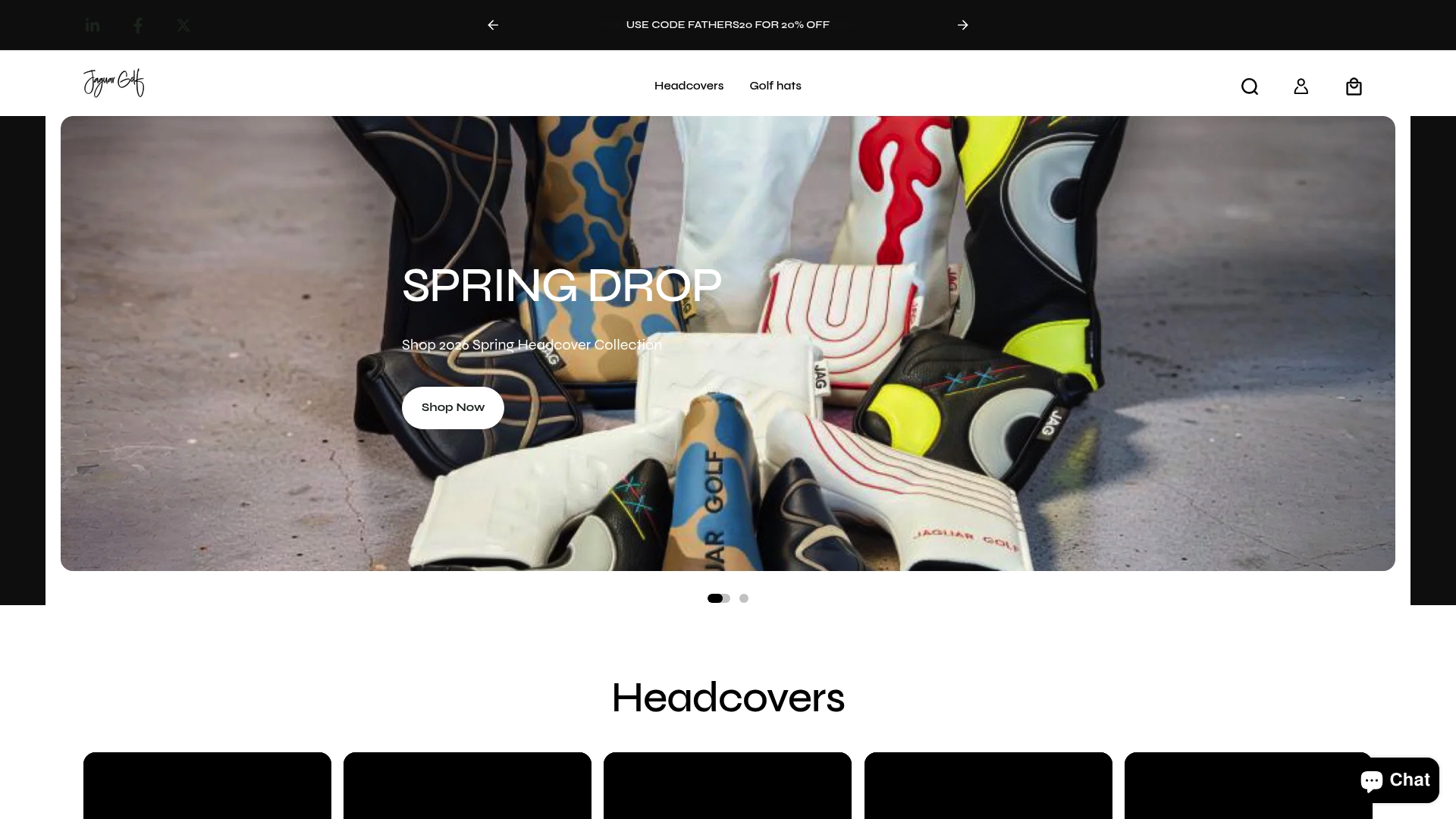
For collectors building a full kit, Jaguargolf also offers headcovers and accessories that coordinate with the hat lineup. The Tactical Camo Fairway Wood Cover is one example of a design-forward piece that functions as both protection and a statement. Every item ships with the same attention to finish and detail that limited edition gear demands.
FAQ
What is limited edition golf gear?
Limited edition golf gear is equipment or accessories produced in a fixed, capped quantity with unique designs, finishes, or brand collaborations not available in standard product lines. Prices range from around $40 for hats to over $700 for premium putters.
How do I find limited edition golf accessories?
Limited edition golf accessories release through brand websites, specialty golf retailers, and direct capsule collection drops. Signing up for brand newsletters and following golf gear news sites gives collectors early access before items sell out.
What makes a limited edition club worth collecting?
Production volume and material rarity are the two strongest value indicators. Clubs with explicitly capped runs and unique manufacturing processes, like Damascus steel inserts or Oil Can PVD coatings, hold resale value better than cosmetic-only releases.
Are limited edition golf balls worth buying?
Special edition golf balls with foil stamping, tournament graphics, or numbered packaging carry collectible value, especially when kept sealed. Collectors typically buy two sleeves: one to play and one to keep.
How do brand collaborations affect limited edition gear value?
Cross-industry collaborations, such as a luxury watchmaker partnering with a golf equipment brand, expand the collector audience beyond golfers. That broader demand drives prices higher and sustains interest longer than single-brand limited releases.
Recommended
- Golf Accessories Guide 2026: Headcovers, Hats & Everything Your Bag Ne – Jaguar Golf
- The Complete Golf Gear Guide: Everything You Need to Play Your Best Ga – Jaguar Golf
- Custom Golf Headcovers: The Complete Guide to Personalized Club Covers – Jaguar Golf
- Best Golf Headcovers 2026: Premium Driver & Putter Covers Ranked – Jaguar Golf


