

Standout Pro-Am tournaments pair one bold competitive twist, a themed hole, a shamble format, a skins side game, with hospitality that closes the aspirational gap between amateur and professional. That gap, the chance to walk 18 holes next to someone amateurs watch on television, is the actual product organizers are selling. Everything else, gift bags, live scoring, a signature hole, works because it deepens that proximity and gives players something to talk about afterward.
The highest-impact levers are simple to name, even if they take real planning to execute well:
- One signature hole or format twist that breaks from standard stroke play
- A pairings party the night before that lets amateurs meet their pro
- Premium, branded swag that signals the event is worth the entry fee
- Live scoring or a leaderboard app that keeps spectators and players engaged
- A hospitality plan (food, drink, shade, seating) that treats the round as one part of a bigger day
The events people still talk about years later rarely won on prize money or course difficulty, illustrating how hospitality-driven event programming can elevate a tournament as seen in the Play & Connect – Padel International Championship. They won on the fifteen minutes amateurs spent laughing with a pro at the pairings party.
If you organize one event this year, spend your differentiation budget on a single memorable hole and a genuinely social evening function before you spend it on anything else.
Key Takeaways
A standout Pro-Am tournament style comes from pairing one bold format or hole with hospitality that closes the distance between amateur and pro.
| Point | Details |
|---|---|
| Lead with one signature twist | Pick a single themed hole or format change rather than overhauling every hole. |
| Prioritize the pairings party | Evening hospitality drives satisfaction more reliably than prize money or course difficulty. |
| Match format to goal | Use scramble for large charity fields, best ball or shamble for skilled or corporate groups. |
| Simplify handicapping when pace matters | A flat team reduction moves faster than hole-by-hole course handicaps. |
| Choose premium, packaged swag | A signature headcover from Jaguargolf outperforms multiple cheap giveaways in perceived value. |
Table of Contents
- How does a stand out Pro-Am tournament style actually work?
- Which Pro-Am format fits your event goals?
- What decisions shape a Pro-Am’s design early on?
- What signature holes make a Pro-Am memorable?
- Why does the pairings party matter more than most organizers think?
- How much does a Pro-Am cost to run?
- How should scoring and tech keep players engaged?
- What does a sample 18-hole day-of blueprint look like?
- Which real Pro-Ams show what standing out actually looks like?
- How should amateurs prepare for a Pro-Am?
- What should organizers check before, during, and after the event?
- How do you plan for weather and delays?
- Sources
How does a stand out Pro-Am tournament style actually work?
A Pro-Am pairs one or more professional golfers with a group of amateurs, most commonly three amateurs per pro, for a round that blends competition with access. These events typically run the day or two before a professional tournament proper, giving sponsors, club members, and charity donors a chance to play alongside talent they’d otherwise only see from behind a gallery rope.
Organizers run Pro-Ams for reasons that rarely show up in the scorecard. Charities use them to convert a golf outing into a fundraising engine, where entry fees, sponsorships, and auction items matter more than who wins the flight. Corporations use them for client hospitality, a full day of relationship-building that a boardroom meeting can’t replicate. Private clubs run member Pro-Ams for prestige and retention, giving loyal members a marquee event on the calendar. Tour-adjacent Pro-Ams exist largely for sponsor activation and media exposure, turning a practice round into a brand platform.
Before picking a format or planning a single hole, decide which of these goals matters most. A charity event and a corporate hospitality day look similar on paper but demand different pairings, different pacing, and different hospitality spend.
Which Pro-Am format fits your event goals?
Format choice shapes everything downstream: how long the round takes, how competitive it feels, and how forgiving it is for a wide range of handicaps. The five formats below cover nearly every Pro-Am on the calendar.
Scramble has every player on a team hit a tee shot, then the team picks the best ball and everyone plays from there. It’s forgiving, fast, and social, which makes it the default for charity events with large, mixed-skill fields.
Best ball has each player play their own ball for the full hole, with only the lowest score on the team counting. It rewards individual play more than scramble does and suits fields where at least a few amateurs can genuinely compete.
Alternate shot has partners trade off hitting the same ball. It’s demanding and slower, better suited to smaller, skilled fields than a 144-player charity shotgun.
Shamble is a hybrid: everyone tees off, the team picks the best drive, then each player plays their own ball into the hole from that spot. It splits the difference between scramble’s forgiveness and best ball’s individual stakes.
Texas scramble adds a rule that no player’s drive can be used more than a set number of times per round, forcing every amateur to contribute. It works well for corporate days where organizers want every guest involved, not just the strongest golfer.
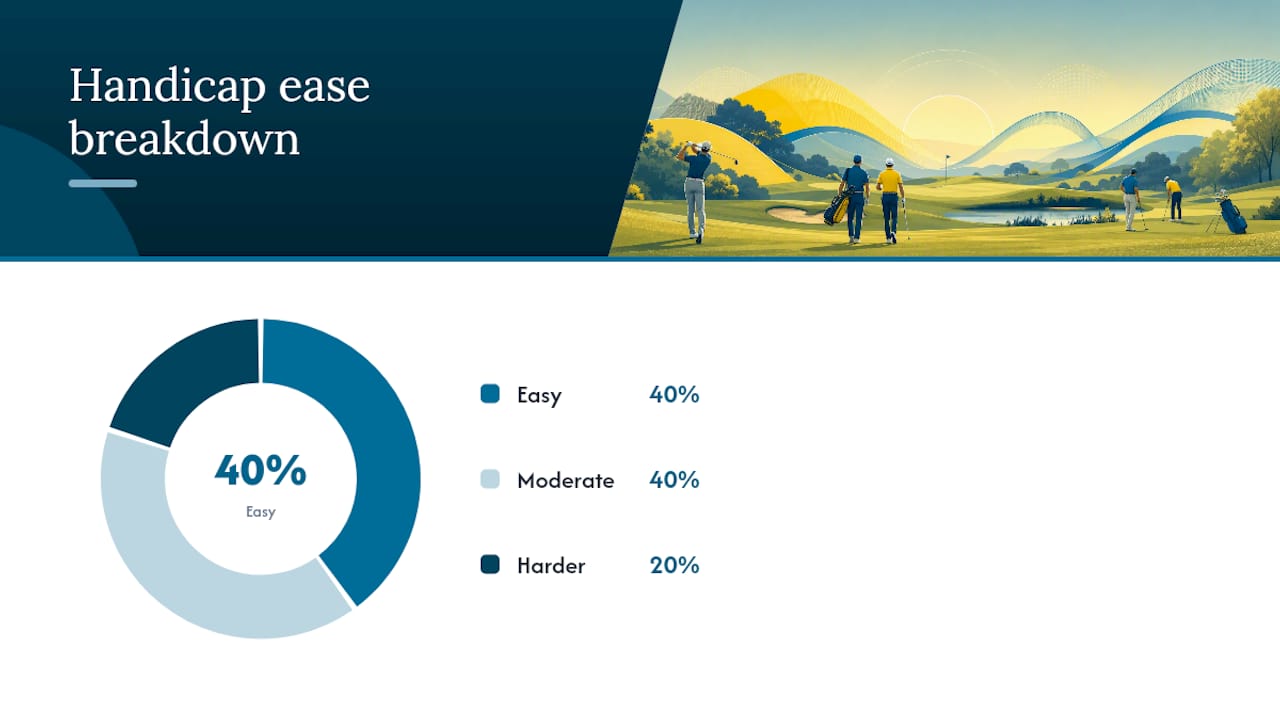
| Format | Best for | Fun/social factor | Competitive integrity | Handicap ease |
|---|---|---|---|---|
| Scramble | Charity, large fields | High | Low | Easy |
| Best ball | Member events, mixed skill | Medium | High | Moderate |
| Alternate shot | Skilled, smaller fields | Medium | High | Harder |
| Shamble | Corporate hospitality | High | Medium | Moderate |
| Texas scramble | Corporate, full participation | High | Medium | Easy |
Skins games and modified stableford scoring often run as side contests layered on top of any of these, giving amateurs extra chances to win something without changing the core format.
What decisions shape a Pro-Am’s design early on?
Team size, pairing method, and scoring rules determine whether your event feels intimate or chaotic before a single tee shot happens. Most Pro-Ams settle on one pro plus three amateurs, a ratio that balances access (each amateur gets real face time with the pro) against field size (organizers can still run 30 to 40 groups in a single shotgun start).
Pairings strategy matters more than most organizers realize. A blind random draft feels fair but can pair a shy first-timer with three strangers and no shared context. Seeded pairings, grouping by skill or by donation tier, keep pace of play even and reward top sponsors with stronger pros. Sponsor-hosted groups let a company buy an entire foursome, which works well for corporate hospitality days. Celebrity or media pairings, when available, tend to generate the most social content but require careful handling so the celebrity’s group doesn’t slow the whole field.
Handicapping in a Pro-Am rarely needs to be exact. Course handicap tables work fine for member events where accuracy matters to the outcome. For charity scrambles, a flat team handicap or a simple percentage reduction moves players faster and avoids arguments over decimal-point fairness.
- Decide team size and pro ratio based on field size goals, not tradition alone
- Choose a pairing method that matches your event’s purpose (access, revenue, or content)
- Simplify handicapping whenever pace of play is more valuable than scoring precision
- Build in a skins or closest-to-pin side game for amateurs who won’t factor into team scoring
Pro Tip: If your field includes both scratch golfers and 25-handicappers, use a shamble instead of a scramble. It keeps the pace benefits of picking the best drive while still giving stronger players a reason to play their own ball in.
What signature holes make a Pro-Am memorable?
A single well-designed hole can define how a field talks about your event for years, and it costs far less than most organizers assume. Themed holes, a “Wild West” par 3 with hay bales and a longest-drive contest, or a redesigned green shaped like a state or logo, give players something visual to photograph and post before they’ve even finished the round.
Alternate-shot challenge holes work well as one-off inserts even inside a scramble round: for one hole only, teams must alternate shots, which slows nothing meaningfully but changes the texture of that hole entirely. Putting islands, temporary greens built on a driving range or practice area, make for a strong 19th-hole contest during the pairings party rather than during play itself. Risk/reward holes, a drivable par 4 with a hazard-lined direct line, give spectators something to watch and give amateurs a story regardless of the outcome.
The trade-off is pace of play. Every gimmick hole adds time, and a field of 40 groups can turn a clever idea into a five-hour bottleneck. Reserve the most elaborate concepts for one or two holes per round, never more, and staff them with a dedicated volunteer who resets props and keeps the group moving.
- Themed par 3s with props, signage, and a side contest
- One alternate-shot insert hole inside an otherwise scramble round
- A temporary putting island near the clubhouse for the evening event, not the round itself
- A drivable risk/reward par 4 with a spotter stationed to keep pace
Pro Tip: Put your best photo opportunity on a hole with a natural backdrop, water, elevation, or skyline, and station a staff member there with a phone or camera. Amateurs rarely think to capture their own best moment; someone else has to do it for them.
Why does the pairings party matter more than most organizers think?
Event organizers who’ve run repeat Pro-Ams consistently point to the pairings party as the single highest-leverage evening event on the calendar, because it’s where amateurs actually meet their pro before pressure and pace of play take over the next day. A live draw, drinks, and 90 minutes of unstructured mingling do more for participant satisfaction than almost anything that happens during the round itself.
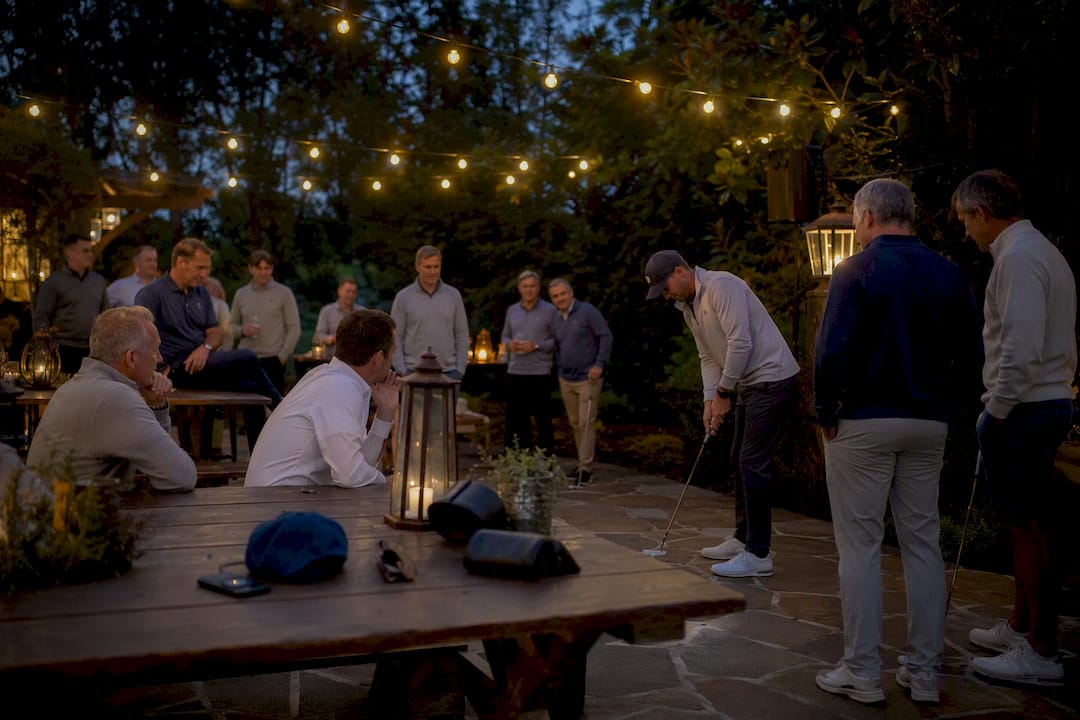
VIP hospitality on tournament day extends that same logic onto the course: a hospitality tent behind a signature hole, a chef station instead of a hot dog cart, and an open bar sponsored by a named partner all signal that the entry fee bought more than 18 holes. Amateur participants routinely receive premium gift bags as part of this experience, and a well-packaged bag, thoughtful packaging genuinely changes how a $150 accessory feels, can outperform prize money as a satisfaction driver.
A reasonable rule of thumb: budget swag at a moderate percentage of the entry fee for a mid-market event, higher for sponsor-funded charity fields where the swag itself is a sponsor activation.
- Schedule the pairings party the evening before, not the morning of
- Include a live draw or reveal moment, not a pre-printed list on a table
- Pair hospitality tents with the round’s best photo hole for maximum foot traffic
- Set a swag budget as a percentage of entry fee, then negotiate sponsor-branded items to stretch it
Pro Tip: Skip generic branded pens and koozies. A single premium item, a monogrammed headcover or a well-made hat, reads as far more valuable than five cheap giveaways, even at a similar total cost.
How much does a Pro-Am cost to run?
Budgets vary enormously by field size and ambition, but the line items are consistent across nearly every event.
Sponsor tiers offset most of this. A title sponsor typically pays the largest fee in exchange for event naming rights and the most prominent signage; a hole sponsor pays a lower, fixed fee for a branded tee sign and cart-path banner at one hole; a hospitality sponsor funds the pairings party or bar in exchange for logo placement across that specific function. Price bands depend heavily on market and field size, so organizers should benchmark against comparable local events rather than a national average.
Registration workflow should collect waiver signatures, dietary and guest details, and handicap information at signup, not at check-in. A simple online form tied to payment processing prevents the day-of bottleneck that comes from collecting paperwork on-site.
- Set pro appearance fees and course costs first; they’re the least flexible line items
- Build sponsor tiers around deliverables, not just dollar amounts
- Collect waivers and special requests during online registration, not check-in
- Confirm final headcounts with catering at least seven days out
How should scoring and tech keep players engaged?
Scoring format determines pace almost as much as it determines fairness. Best-ball net scoring is the easiest for amateurs to understand in real time, since only the best score per hole counts, and spectators can follow it without a scorecard. Scramble hybrids simplify scoring further because the whole team plays one ball, cutting decision time on every shot. Skins games and modified stableford work well as side contests layered over any primary format, giving amateurs extra chances to win something small without changing team scoring.
For handicaps, a flat team reduction (deduct a set number of strokes based on combined handicap index) moves faster than calculating individual course handicaps hole by hole, and it’s plenty fair for a one-day event.
Live-scoring apps and digital leaderboards have become close to standard at mid-size and larger Pro-Ams, letting sponsors and spectators track group standings from a phone rather than a printed sheet. Reserve real-time updates for the front nine and back nine turn; delayed, batch-updated scoring at the clubhouse works fine for smaller fields where the tech overhead isn’t worth the cost.
Pro Tip: Assign one scoring volunteer per four groups, not one per event. A single overwhelmed scorer is the most common reason leaderboards fall behind and amateurs lose interest in the results.
What does a sample 18-hole day-of blueprint look like?
A workable day-of schedule for a shotgun-start Pro-Am with roughly 30 to 40 groups looks like this:
| Time | Activity |
|---|---|
| 7 AM | Check-in, range access, coffee and breakfast bites |
| 7:45 AM | Player meeting at starter’s tent, rules and format review |
| 8 AM | Shotgun start |
| 8 AM to 1:00 PM | Round in progress; signature hole and hospitality zones active |
| 1:15 PM | Scorecards collected, lunch service begins |
| 2 PM | Awards, raffle, and sponsor recognition |
Place your most elaborate signature hole in the middle third of the course, holes 7 through 12, so early groups aren’t rushed and late groups aren’t racing daylight. Position hospitality and spectator zones near that hole and near the finishing hole, where the largest crowds naturally gather.
- Starters at every tee box during the shotgun start
- Spotters and marshals stationed at the signature hole and any blind landing areas
- A scoring team sized to one volunteer per four groups
- A hospitality crew dedicated to the pairings party the evening before and lunch service after
Which real Pro-Ams show what standing out actually looks like?
The Razz Invitational builds its entire identity around nonstandard formats on every hole, rotating team configurations and themed setups so no two holes play the same way. The tactic scales well for organizers with a committed volunteer base willing to manage complexity across 18 distinct setups.
The Blaisdell Pro Am leans the opposite direction, running a multi-day format with a large pro purse and structured team compositions. It demonstrates how prize size and field structure, rather than novelty, can define a sponsor-driven event’s character.
The Lanesville Urban Golf Championship plays through city streets and yards with almost no formal budget, proving that a genuinely quirky concept can generate local media coverage without a title sponsor. Grassroots organizers should study Lanesville; sponsor-funded organizers should study Blaisdell.
How should amateurs prepare for a Pro-Am?
Amateurs get the most out of a Pro-Am by treating preparation as seriously as they’d treat a member-guest event, without trying to play like a tour pro.
- Warm up on the range and putting green for at least 30 minutes before the shotgun start
- Confirm the dress code and pack a rain layer regardless of forecast
- Practice on the fastest greens available at your home club, since Pro-Am greens often run faster than club conditions
- Bring a small, thoughtful gift for your pro and their caddie
Pace matters more than personal score. If your ball isn’t in play for the team result, pick it up and keep moving; no pro wants to watch an amateur hunt for a fourth ball in the rough. Support your team by staying upbeat, reading greens for teammates when asked, and remembering the pro is working, not just playing.
- Confirm tee time and check-in details 48 hours ahead
- Charge any scoring app and download it before arrival
- Set a simple, low-pressure goal for the round (enjoy the pairings, not shoot a career number)
What should organizers check before, during, and after the event?
A 90-day countdown keeps a Pro-Am from becoming a last-minute scramble in the worst sense of the word. At 90 days, lock the course date and begin pro outreach. At 60 days, finalize sponsor tiers and open registration. At 30 days, confirm catering headcounts and finalize the pairings party venue. At 7 days, send final logistics emails and confirm weather contingencies. At 1 day, run a final staff briefing and stage all signature-hole props.
Day-of essentials include a printed staff contact list, a weather decision tree, and a single point person authorized to make delay calls.
- Build a 90/60/30/7/1-day countdown checklist and assign an owner to each task
- Print a staff contact sheet with cell numbers for every zone lead
- Send participant surveys within 48 hours of the event while memories are fresh
- Compile sponsor reports and photo content within two weeks for next year’s marketing
How do you plan for weather and delays?
Weather is the one variable no organizer controls, which makes a written contingency plan as important as the format itself. Decide your rain-delay and suspension thresholds before the week of the event, not during a downpour, and assign one person the authority to call a delay or cancellation.
Course superintendents and starters should have a shared radar app and a pre-agreed lightning protocol; most courses follow a 30-minute-from-last-strike restart rule, and organizers should confirm the local course’s specific policy in advance rather than assuming a national standard. Build a 30-minute buffer into the day-of schedule so a short delay doesn’t collapse the awards ceremony into lunch.
Have a backup format ready if the round must be shortened: a 9-hole scramble substitute keeps team scoring intact even if the back nine gets scrapped. Communicate contingency plans to sponsors and participants during registration, not as a surprise text the morning of, so expectations are set before anyone arrives with an umbrella.
For indoor contingencies, a covered hospitality tent large enough to hold the full field, not just VIP guests, prevents an awards ceremony from turning into a rushed parking-lot announcement.
Organizer’s note: lessons from running these events
The pairings party consistently outperforms every other line item on the satisfaction scale, more than any single signature hole. One spectacular hole earns social posts, but it’s the hangout time with a pro that earns repeat registrations. Pace of play beats extra contests almost every time; a field that finishes on time forgives a lot. Jaguar Golf has spent years thinking about what makes event swag feel worth keeping rather than worth tossing, and that same instinct, protect the equipment, express the personality, applies just as well to how organizers should think about the whole day.
A tasteful swag upgrade organizers can actually afford
Gift bags live or die on one item, not five. A signature headcover or a monogrammed accessory reads as a premium keepsake in a way that branded pens and koozies never will, and it gives amateurs something they’ll actually use on their own bag long after the event ends. Personalization options let organizers add event branding or a sponsor logo without making the piece feel like a walking billboard.
Because Jaguar Golf’s accessories span multiple price points, organizers can layer them across sponsor tiers, a full headcover set for title sponsors, a single branded piece for general entry gift bags, without blowing the swag budget or watering down perceived value. If you’re planning gift bags for an upcoming Pro-Am, browse the current headcover collection and pick a piece that matches your event’s colors before your registration deadline locks the swag order.
Sources
- What Is a Pro Am? (And Why Amateurs Actually Get to Play)
- Play Like a VIP: How Pro-Ams Work and How to Get In


