

A seasonal golf fashion wardrobe is a curated collection of coordinated, performance-ready pieces that work across changing weather conditions while reflecting current style directions. The capsule wardrobe model, long established in everyday fashion, now drives how serious golfers approach their closets. A well-built golf wardrobe delivers more than 20 outfit combinations from as few as 8–10 pieces, cutting decision fatigue and reducing unnecessary spending. The 2026 season brings a clear direction: natural fibers, quiet luxury aesthetics, and Pantone’s Cloud Dancer as the defining base color. Getting this right means balancing function and style from the ground up.
What are the essential components of a seasonal golf wardrobe?
A functional golf capsule centers on 8–10 versatile pieces, with roughly 40% of your budget on polos and 25% on bottoms. That ratio reflects how much work those two categories do across every round and season. Get those right, and the rest of the wardrobe fills in naturally.
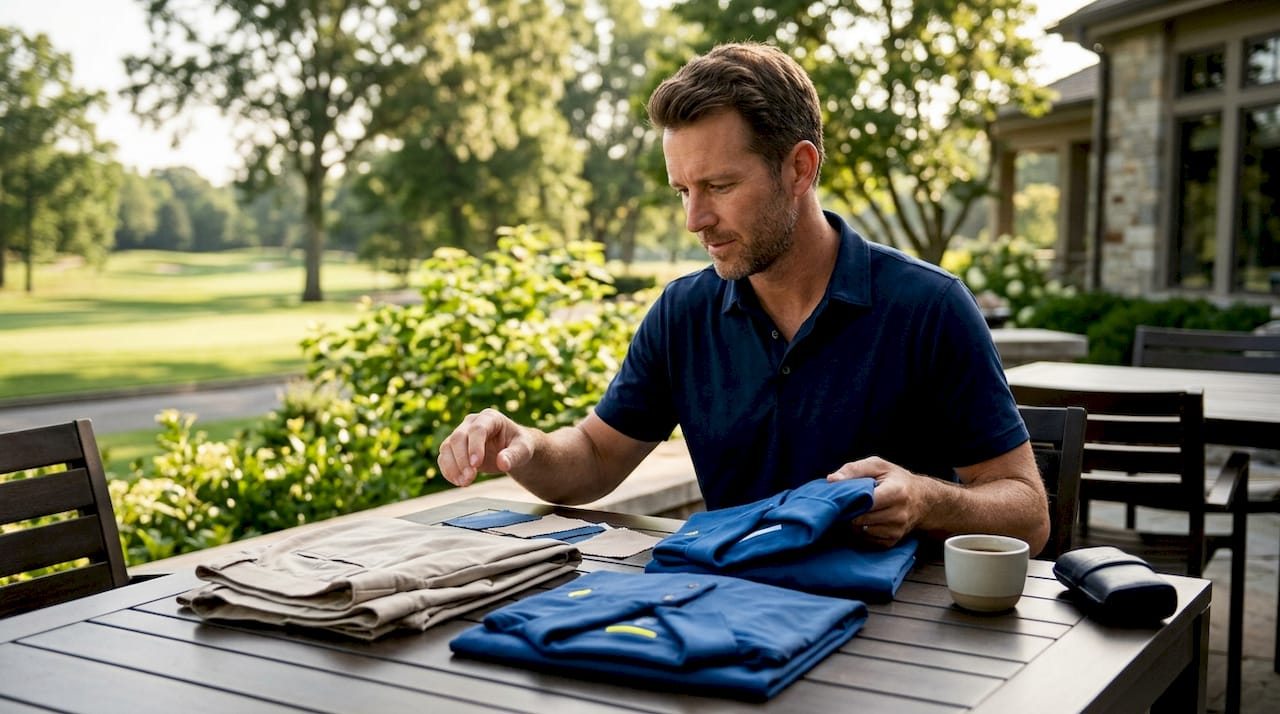
Core apparel categories
Build your foundation with these three categories:
- Polos (3–5 pieces): Choose moisture-wicking, wrinkle-resistant fabrics. Vary between short-sleeve and long-sleeve options to cover spring through fall.
- Bottoms (4–5 pieces): Include both tailored trousers and shorts. Trousers with a slim, straight cut work on and off the course.
- Layering pieces (2–3 pieces): Quarter-zips, lightweight vests, and a packable jacket cover temperature swings without bulk.
Performance fabric features to prioritize
Every piece in a seasonal golf wardrobe should deliver at least two of the following:
- Moisture-wicking to manage sweat during warm rounds
- Wrinkle resistance for a clean look from the car to the first tee
- Thermoregulation to handle cool mornings and warm afternoons
- Stretch recovery to preserve swing mechanics
Accessories as wardrobe anchors
Accessories complete the system. A hat, a belt, and performance socks each add polish and function. Layering with thermoregulating fabrics like cashmere blends or performance knits lets you adjust mid-round without sacrificing your silhouette. Accessories also give you the fastest route to refreshing a look without buying new apparel.
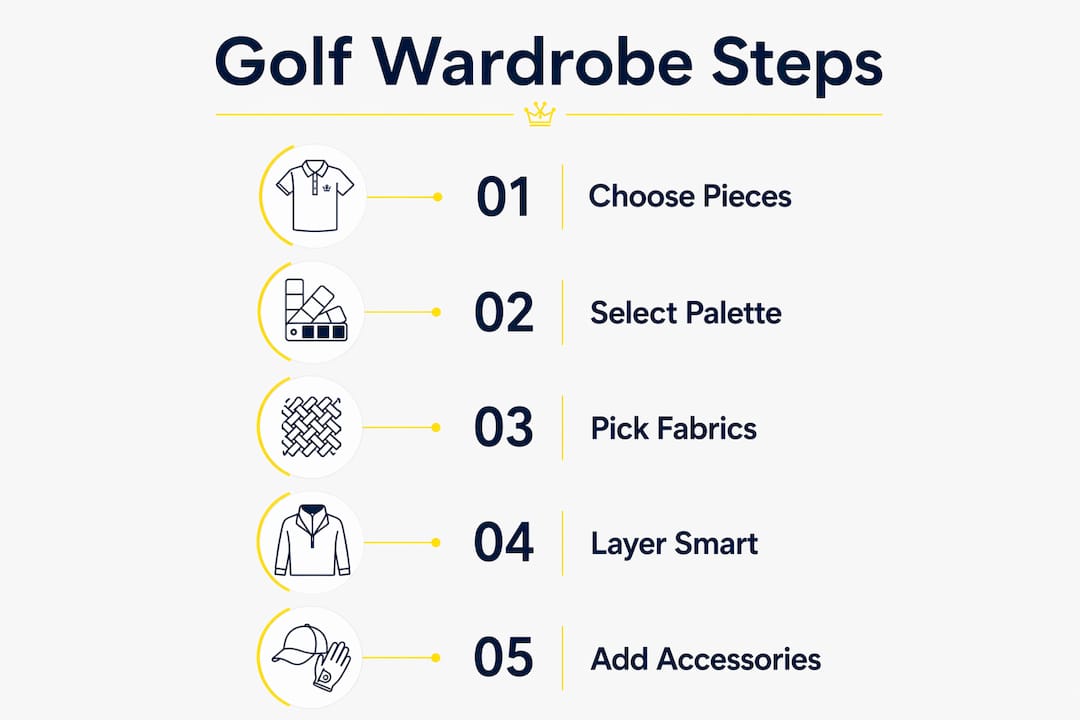
| Category | Recommended Quantity | Key Feature |
|---|---|---|
| Polos | 3–5 | Moisture-wicking, stretch |
| Trousers/Shorts | 4–5 | Tailored fit, wrinkle-resistant |
| Layering pieces | 2–3 | Thermoregulating, packable |
| Accessories | 3–5 | Coordinated, versatile |
How to select a color palette for 2026 golf fashion trends
Pantone’s 2026 Color of the Year is Cloud Dancer, a warm off-white that anchors a golf wardrobe without competing with accent pieces. This shift away from bright base colors reflects the broader quiet luxury trend taking hold across golf apparel. Golfers who build around Cloud Dancer, cream, or bone create a foundation that pairs with almost any accent color they choose.
Building a 3–4 color palette
A tight color story is the single biggest factor in wardrobe versatility. Every piece you buy should pair with at least three items you already own. That rule alone prevents the common mistake of accumulating clothes that never combine into a complete outfit.
A practical 2026 palette looks like this:
- Neutral anchor: Cloud Dancer, cream, or white
- Soft secondary: Navy, slate gray, or warm tan
- Accent color: Electric blue, emerald green, or terracotta
- Optional fourth: Black or charcoal for trousers and outerwear
Fabric choices that match the aesthetic
Natural fibers like cotton piqué, merino, and linen blends are the preferred choice for 2026 golf apparel. They drape better than synthetics, breathe more naturally, and age with character rather than pilling or fading. The shift from purely technical fabrics to natural fiber blends signals a maturation in golf fashion, where performance and refinement coexist.
Avoid loud patterns and heavy graphics. The quiet luxury direction favors tonal textures, subtle stripes, and clean lines. A well-chosen cotton piqué polo in Cloud Dancer reads more expensive than a busy printed synthetic at twice the price.
Pro Tip: When shopping for new pieces, hold them against your existing anchor color. If the combination looks off in the store, it will look off on the course.
How to layer seasonal golf outfits for performance and style
Layering is the skill that separates a wardrobe that works in april from one that works in october. The goal is temperature control without adding bulk that restricts your swing or ruins your silhouette.
Season-specific layering strategies
Quarter-zip pullovers are the preferred layering piece for shoulder-season golf. They offer a cleaner silhouette than hoodies, and the zip gives you precise temperature control mid-round. A hoodie adds bulk at the shoulders and restricts follow-through. A quarter-zip does neither.
Here is how layering maps to each season:
- Spring: Polo plus a lightweight quarter-zip in a secondary color. Remove the layer by the back nine as temperatures rise.
- Summer: Single polo with a packable vest for early morning rounds. The vest packs into a pocket when not needed.
- Fall: Merino base layer under a polo, topped with a performance knit quarter-zip. This combination handles a 20-degree temperature swing.
- Winter: Add a fitted, wind-resistant jacket over the quarter-zip. Keep the silhouette close to the body to maintain swing freedom.
| Season | Base Layer | Mid Layer | Outer Layer |
|---|---|---|---|
| Spring | Short-sleeve polo | Quarter-zip | Optional vest |
| Summer | Short-sleeve polo | None | Packable vest |
| Fall | Long-sleeve polo | Quarter-zip | Performance knit |
| Winter | Merino base | Quarter-zip | Wind-resistant jacket |
Pro Tip: Choose mid layers in your secondary palette color. That way, removing a layer mid-round still leaves you in a coordinated outfit.
What accessories and finishing touches elevate a seasonal golf wardrobe?
Accessories carry more visual weight in golf than in most other sports. A hat, belt, and socks are visible throughout every round, and they signal whether a wardrobe is intentional or assembled at random.
Hats as both style and function
A hat is the most visible accessory on the course. It provides sun protection, frames the face, and ties together the color story of an outfit. The Jaguargolf Patch Hat collection offers options that align with the 2026 quiet luxury direction, including a cream adjustable snapback that pairs directly with a Cloud Dancer base palette. A black adjustable option works as a neutral anchor for bolder accent-color outfits.
Belts, socks, and footwear
These three categories are where most golfers leave style points on the table:
- Belts: Match the belt to your shoe color, not your polo. A leather belt in tan or brown works across most neutral and earth-tone palettes.
- Socks: No-show socks work for shorts in summer. For trousers, a crew sock in a secondary palette color adds a deliberate detail without being loud.
- Footwear: Spikeless golf shoes have become the standard choice for golfers who want on-course and off-course versatility. A clean white or tan leather spikeless shoe pairs with nearly every color story.
Golf-to-street crossover appeal
Off-course versatility is now a primary buying criterion for golf apparel. Tailored trousers, knit polos, and clean accessories that double as office or casual wear extend the value of every piece you buy. A well-chosen golf hat worn to a casual lunch is not a fashion mistake in 2026. It is the point.
Common mistakes that undermine a versatile golf wardrobe
The most expensive mistake in building a golf wardrobe is buying pieces that do not connect to the rest of the collection. A consistent color story requires that every new item pairs with at least three existing pieces. One impulse buy in a color that does not fit the palette creates a piece that never gets worn.
The quality-over-quantity principle
More pieces do not mean more outfits. A wardrobe of 8–10 well-chosen items in a tight color story produces more combinations than a closet of 25 mismatched pieces. Prioritize fabric quality and fit over volume. A well-made merino quarter-zip lasts five seasons. A cheap synthetic alternative loses its shape in one.
Staying current without overbuying
Frequent color refreshes drive golf apparel retail, and brands release new colorways every season. That cadence is designed to trigger impulse purchases. The discipline is to add one or two accent pieces per season rather than rebuilding the wardrobe from scratch. Swap in a new polo or a fresh hat to reflect the current season without disrupting the foundation.
Pro Tip: Before buying any new piece, lay it next to three items already in your wardrobe. If it does not work with all three, put it back.
Key Takeaways
A seasonal golf wardrobe built on 8–10 coordinated pieces in a 3–4 color palette delivers the most outfit combinations with the least waste.
| Point | Details |
|---|---|
| Start with 8–10 pieces | Allocate 40% of budget to polos and 25% to bottoms for maximum combinations. |
| Anchor to Cloud Dancer | Use Pantone’s 2026 Color of the Year as your neutral base and build accent colors around it. |
| Layer with quarter-zips | Quarter-zips outperform hoodies for shoulder-season golf in silhouette and temperature control. |
| Choose natural fibers | Cotton piqué, merino, and linen blends outperform synthetics in drape, comfort, and longevity. |
| Apply the three-piece rule | Every new purchase must pair with at least three existing wardrobe items before you buy it. |
Why the capsule mindset changed how I think about golf style
I spent years buying golf clothes the wrong way. A sale polo here, a new color there, and suddenly a closet full of pieces that never quite worked together. The capsule wardrobe concept felt restrictive at first. Eight pieces sounded like a limitation. It turned out to be the opposite.
When every item in your bag connects to the others, getting dressed before a round takes thirty seconds. You stop standing in front of the closet second-guessing combinations. You also stop wasting money on pieces that look good in isolation but never get worn. The three-piece pairing rule is the single most useful filter I have applied to any purchase decision.
The 2026 shift toward natural fibers and quiet luxury aesthetics also matters more than it sounds. A cotton piqué polo in Cloud Dancer with a navy quarter-zip and tan trousers reads as put-together in the clubhouse, at lunch, and at the office. That crossover value is real. It means the cost-per-wear on a well-chosen golf piece drops significantly when you wear it three times a week instead of once.
The accessory layer is where I see most golfers underinvest. A hat that coordinates with your palette does more for the overall look than a new polo. It is the detail that signals intention. Jaguargolf’s hat collections are worth a look specifically because the colorways are designed to complement neutral-anchored wardrobes rather than compete with them.
— Joshua
Jaguargolf’s gear for your seasonal wardrobe
Apparel sets the foundation, but accessories complete the picture. Jaguargolf designs hats and headcovers that align with the quiet luxury direction defining 2026 golf fashion. The spring headcover collection includes options that coordinate directly with Cloud Dancer and neutral-based palettes, giving your bag the same intentional look as your outfit.
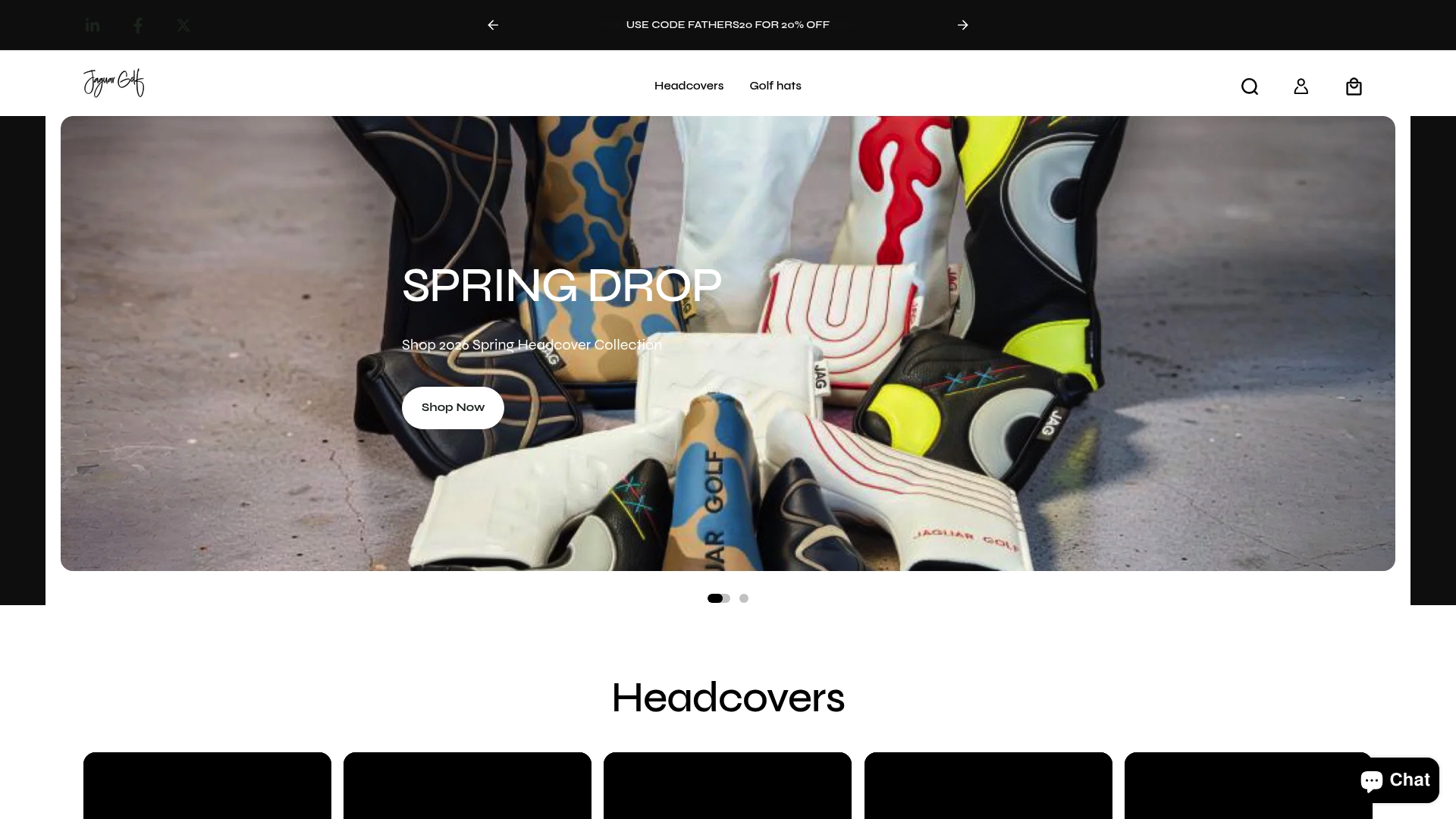
The Jaguargolf Cursive Hat and the black snapback both work as neutral anchors or accent pieces depending on your palette. Each is built for the golfer who treats accessories as part of the wardrobe system, not an afterthought. Quality materials and clean design mean these pieces hold up across seasons and work as well off the course as on it.
FAQ
What is a seasonal golf fashion wardrobe?
A seasonal golf fashion wardrobe is a curated set of 8–10 coordinated apparel pieces and accessories designed to perform and look polished across different weather conditions throughout the year.
How many pieces do I need for a complete golf capsule wardrobe?
A functional golf capsule wardrobe requires 8–10 pieces, including 3–5 polos, 4–5 pairs of trousers or shorts, and 2–3 layering items, which together produce over 20 outfit combinations.
What colors work best for a 2026 golf wardrobe?
Pantone’s 2026 Color of the Year, Cloud Dancer, serves as the ideal neutral base. Pair it with one soft secondary color and one saturated accent like electric blue or emerald green for a complete palette.
Why are quarter-zips better than hoodies for golf layering?
Quarter-zips provide a cleaner shoulder silhouette and zip-based temperature control that hoodies cannot match. They also avoid the bulk that restricts swing mechanics during a round.
What fabrics should I prioritize for seasonal golf apparel?
Cotton piqué, merino wool, and linen blends are the top choices for 2026. They offer better drape, breathability, and longevity than synthetic alternatives while meeting the refined aesthetic of current golf fashion trends.


